Case Study: How DREADMOOR Reached 200,000 Wishlists (A Step-by-Step Story with Figures and Sources)
Irina Borodina, the marketing director of Digital Vortex Entertainment, shared how the company managed to gather over 200,000 wishlists for their new game DREADMOOR.
This column was first published on Game World Observer.

Irina Borodina
We surpassed the milestone of 200,000 wishlists for DREADMOOR and decided to break down exactly what led us to this number.
The most interesting part: we achieved most of our growth without deploying "big marketing guns." No huge budgets, no massive ad campaigns, nor demo releases at festivals like Steam Next Fest.
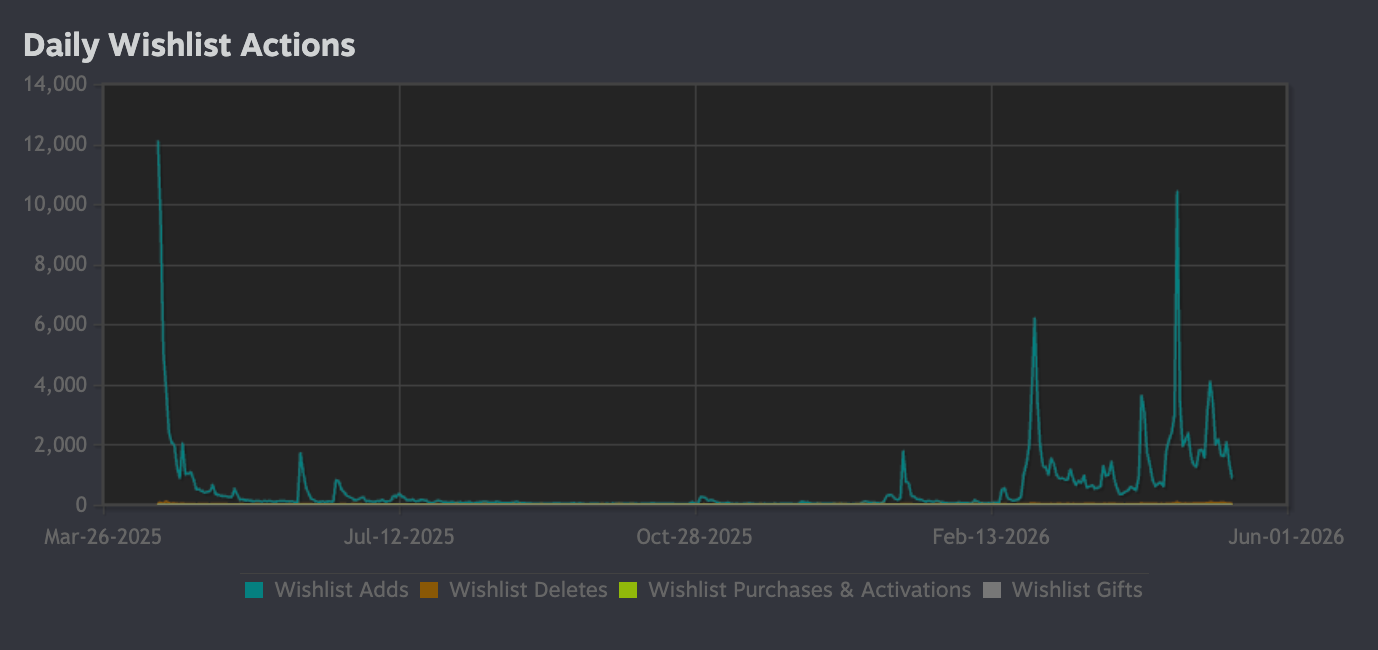
The buzz around the project began back in April 2025 after the announcement. We started working with Dream Dock, the game's developer, in the fall of 2025—at which time the game had already garnered around 70,000 wishlists, based purely on its concept and atmosphere. Over the following months, we tripled that figure. Let's examine how we accomplished this.
Spike #1 — January 2026. First Closed Playtest (Plus 4,000 in a Week)
The playtest was more of a technical stage for us: collecting initial feedback and testing gameplay hypotheses. It also became an important signal to the audience: "the game is real" (after the announcement, theories began circulating that the game was fake; the playtest quickly dispelled this).
From a marketing standpoint, we did almost nothing: just our own social media and a bit of UA. Nevertheless, we gained 4,000 wishlists in a week.
Spike #2 — February 2026. Gameplay Trailer at IGN Fan Fest (Plus 44,000 in a Month)
IGN Fan Fest is a free online showcase for which you need to qualify. We got in with a gameplay trailer.
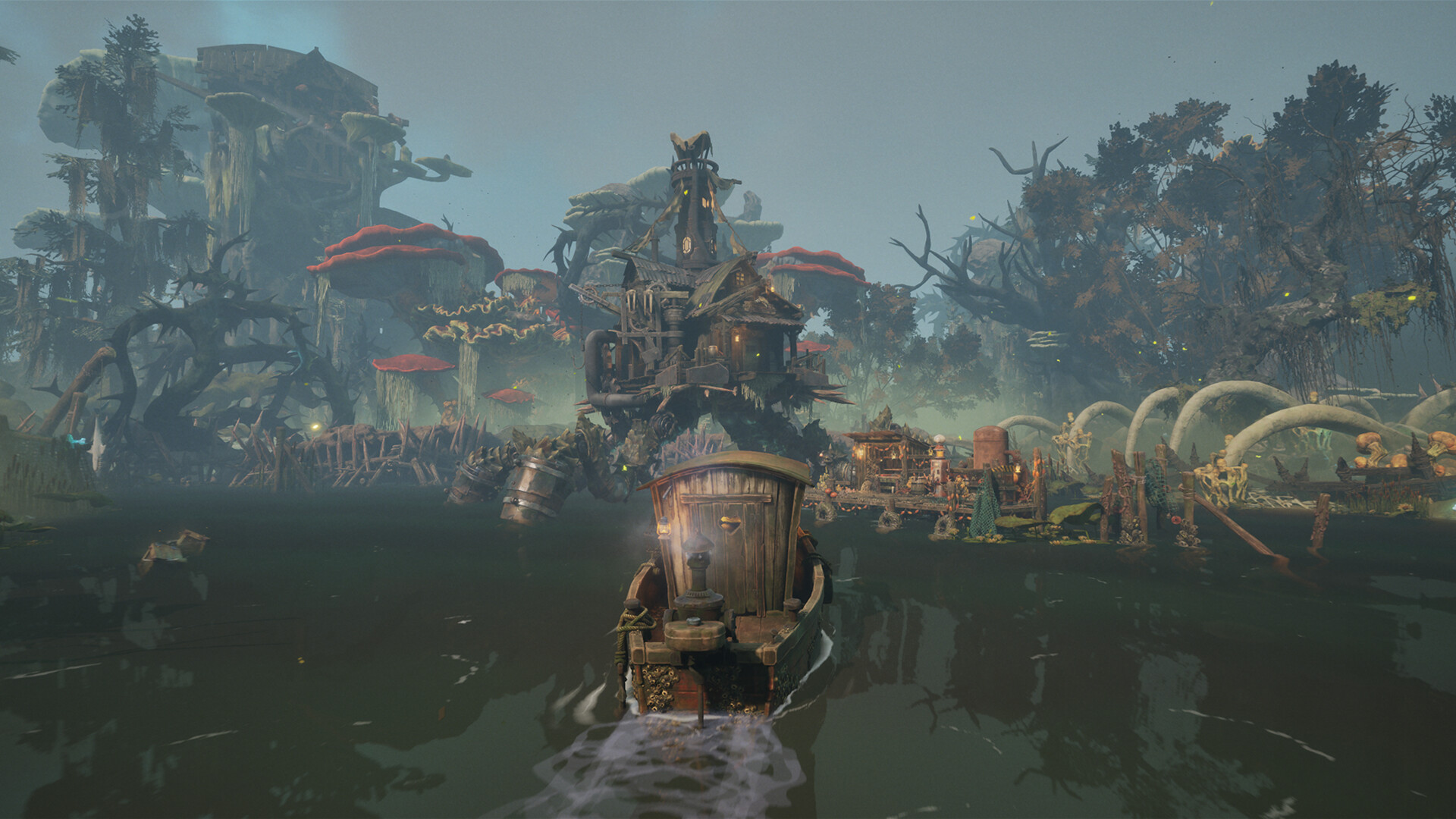
At that time, the game didn't have much content yet, so the main task was not to show scale, but to convey the atmosphere and vibe of the project as much as possible. And it worked.
By the start of the festival, we had around 88,000 wishlists.
But the showcase was just part of the story. Simultaneously, we:
- sent the trailer to vertical creators;
- conducted a press release;
- actively supported the release on social media (one reel, for example, garnered nearly 300k views);
- purchased a bit of traffic.
Altogether, this created a snowball effect, resulting in over 44,000 wishlists in a month. In March, we further stimulated interest by participating in GDC 2026, receiving coverage from a fairly large number of indie publications, and establishing initial contact with IGN.
Spike #3 — April 2026. First Major Launch of Our Verticals and IGN Preview (Plus 13,000 in a Week)
At some point, the algorithms finally "got a taste" of our content. Several videos simultaneously went viral on TikTok and Reels, collectively gathering about a million views.
Importantly: there was no informational reason behind this. No trailer, announcement, or event. Just consistent team efforts with content. And this is perhaps one of the most important conclusions of the case: algorithms rarely reward immediately. But if you post systematically, the chance to ride the wave increases sharply. After this spike, new videos began to be picked up by platforms noticeably more eagerly.
A contribution was also made by an article on IGN, written by the editorial team after visiting our booth at PAX East, where we showcased a fresh build of the game.
Spike #4 — April 2026. Posts from IndieGameJoe (+25,000 in a Week)
IndieGameJoe's influence among indie developers is already legendary, and it was our turn to touch greatness.
We simply reached out to Joe directly, showed him the project; he liked it, and we arranged for posts. To preempt the question—yes, it was free.
He posted about DREADMOOR on X, Facebook*, Instagram* (* — products of Meta, which is recognized as extremist and banned in the Russian Federation), TikTok, and YouTube. Within the first day, these posts gathered over 2.5 million views in total. This translated into:
- 10,000 wishlists on the first day;
- over 25,000 in a week.
Spike #5 — May 2026. Unexpected Viral Trailer on Indie Games Hub (+17,000 in a Week)
This was the most chaotic spike of all.
Indie Games Hub unexpectedly posted our old announcement trailer, and it unexpectedly went viral with 150,000 views, significantly higher than the channel’s usual metrics.
Even old content can unexpectedly spike if the game has already begun accumulating recognition.
Now all these significant spikes have started to work in synergy with one another.
The project has stabilized its organic influx to roughly one and a half to two thousand wishlists per day.
Major accounts (such as Dexerto, ClemmyGames and others) continue to write about the game periodically, and our verticals are much more often accumulating hundreds of thousands of views.
What Conclusions Can Be Drawn from This Case
- DREADMOOR has a very strong core hook. The concept of "DREDGE, but from a different perspective and with its own atmosphere" immediately resonates with the audience and evokes emotion.
- Atmosphere sells as well as gameplay. Many videos and trailers worked primarily on mood, anxiety, and vibe—and that was enough for people to add the game to their wishlist.
- Consistency in social media is critically important. Most viral successes happened not because we did something magical, but because we published content regularly and systematically.
- Vertical content is currently one of the most powerful sources of organic growth for indie games.
- Events still work great if you don’t limit yourself to participation alone, but enhance it with distribution, social media, and influencers.
- One right influencer can provide results comparable to a large advertising campaign.
- Wishlists grow non-linearly. It might seem for a long time that "nothing is happening," and then several informational occasions begin to amplify each other, and the growth rate accelerates sharply.
- And yes, IndieGameJoe is a powerhouse.