"Feature in RuStore for a mobile project and a new publisher for PC game," Yuri Bogdanov from TryHard Games on the results of 2025
We continue to wrap up 2025 with gaming teams. Up next is an interview with Yuri Bogdanov, co-founder of TryHard Games studio.
How was the year 2025 for your team?
Yuri Bogdanov, TryHard Games: 2025 was an inspiring year for us.
Our social mobile project—a visual novel "Notes of a Psychologist"—was featured on the main page of RuStore, made it to the top downloads in its genres, and won an award at the Indie GO! fund and game developers' community pitch in our team's home city, Rostov-on-Don. By the end of the year, we found unexpected localization support from a group of linguist volunteers who are native Chinese speakers.
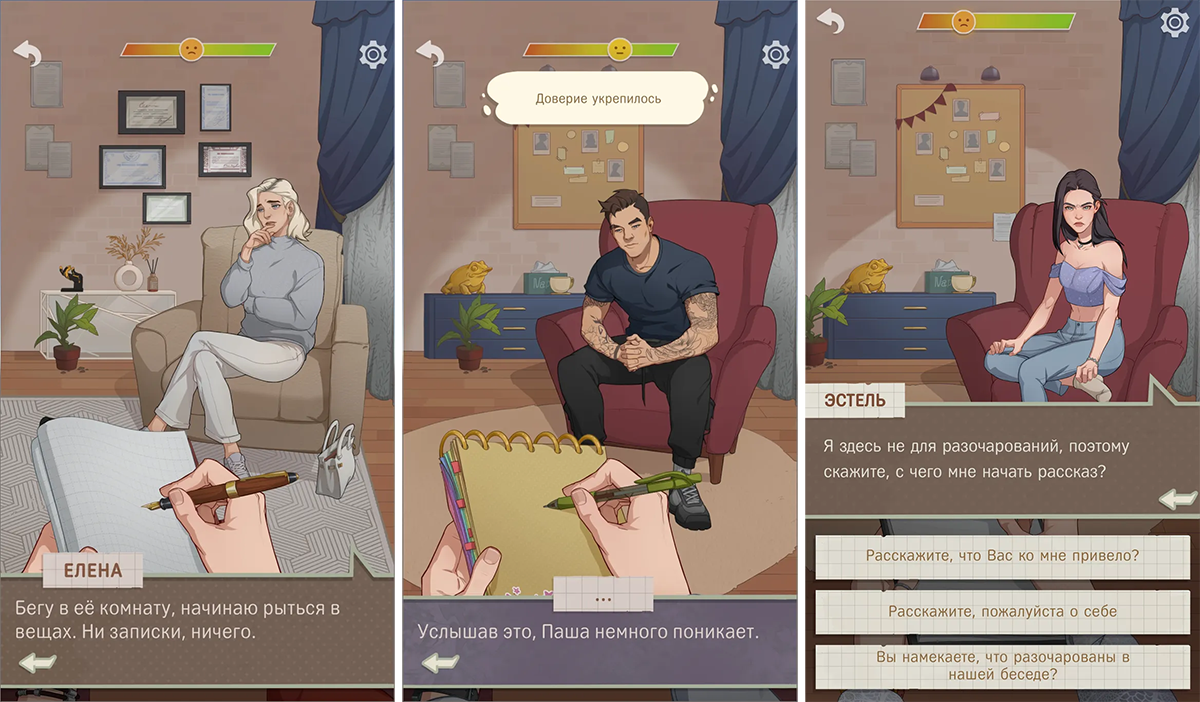
"Notes of a Psychologist"
With our main PC project, working title "The Architect," we reached MVP and attended several exhibitions, including both Russian and international ones. By the way, we are very grateful to the App2Top editorial team for making it to the shortlist of projects mentioned in your publication about the Moscow "Game Industry" conference, which was a delightful surprise. At the Asian Gamescom, we managed to showcase at a local accelerator's booth. This provided excellent visibility and infrastructure at the exhibition. We wish there were more opportunities like this in Russia. After the exhibitions, we started a new communication cycle with five Russian and international PC publishers. We are working on sharing our collaboration experience with one of them in 2026.
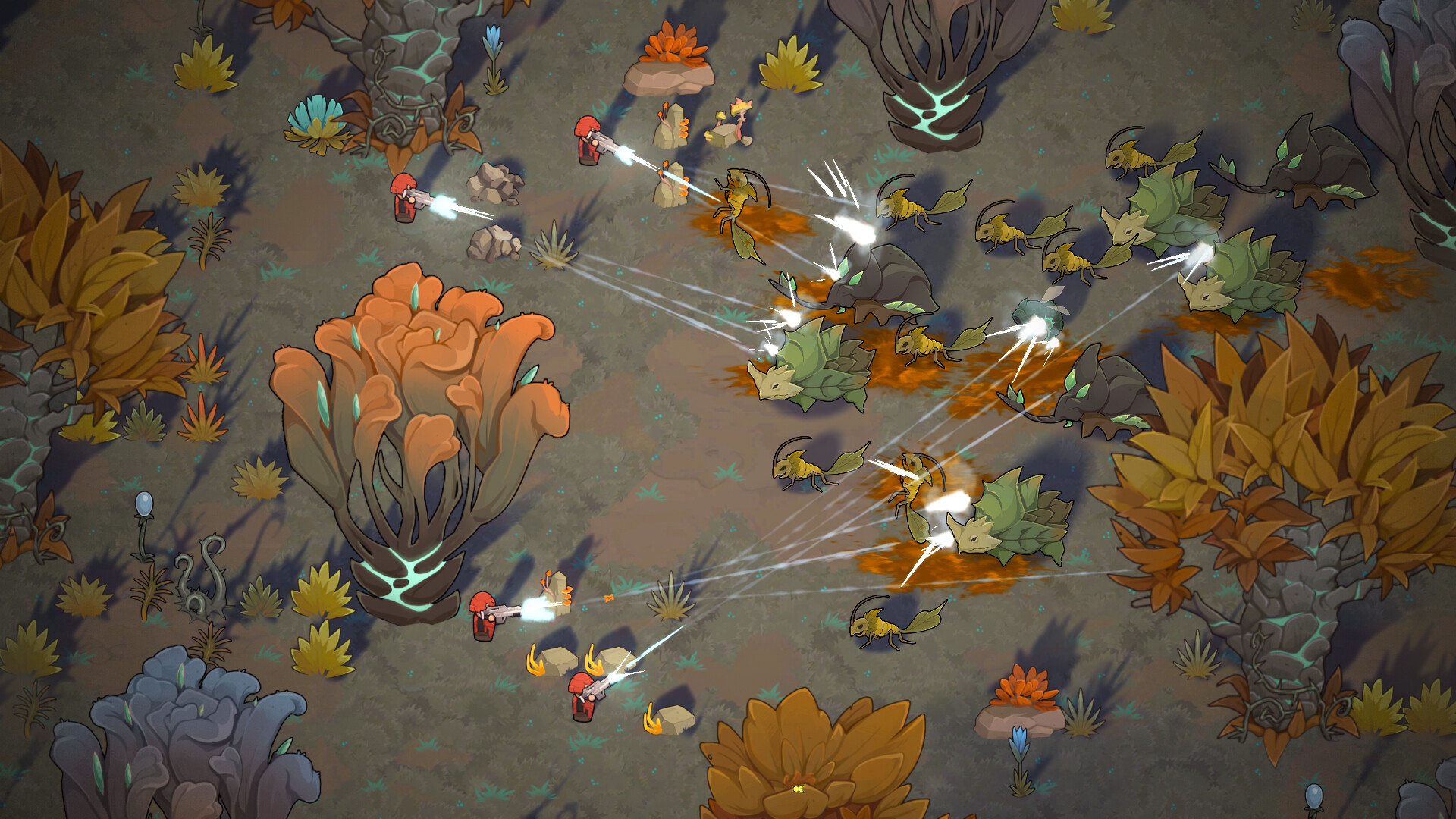
"The Architect"
What have you achieved that you are proud of, and what did you not manage to accomplish?
Yuri: One of the unique experiences was shifting the development of "The Architect" from a survival PvP sandbox to PvE scenarios.
The sandbox mode was popular with our early testers and helped us move forward, but without thousands of players on the servers, it was challenging to convey the value of such a project to publishers and media. After spending more than six months developing the scenario mechanics and filling it with content, we immediately received a new wave of interest from publishers. Now it is crucial for us not to let the players down and deliver genuinely engaging adventures that they'll want to invite their friends to play.
We're proud of what we've accomplished at TryHard Games, including the aforementioned successes, as well as some unannounced but ongoing developments. We smile and grind.
What conclusions did you draw as a development studio by the end of 2025?
Yuri: Despite having a relatively regular presence at exhibitions and interacting with potential publishers, scouts, and critics, we conducted development somewhat isolated from random players, being highly critical of ourselves and our creations. However, when we showed an early alpha to players, we were surprised to find that they saw and could substantiate value in even what we considered to be a basic minimum. They could spend hours enjoying the survival experience on an empty planet, where we sincerely saw no interesting content for more than an hour. They even enjoyed the simple shooting mechanic of the initial weapon and refused to replace it with a more powerful one just because they were having fun.
In general, the conclusion is quite simple: we need to show the game to players more often (even more often). This is worth doing not always because you believe there's something to show or because you have a specific questionnaire, but simply because it's incredibly difficult to objectively look at your own creation. Only the player is its judge. As the famous phrase goes—only cash is cash, and so only a real player is a player. Only they can understand, find, see, suggest, and (lead you into an abyss) bring you to their friends and product virality.
Another "takeaway of the year": it's challenging with Russian technologies for game development for now. Much has been said and written about engines, but there's silence about server backend technologies equivalent to Nakama or PlayFab, which are necessary for games like ours, or about audio tools like FMOD or Wwise. We lack expertise in sound, but when it comes to servers, we have ample experience from working on large-scale online businesses, so we started building our own server and analytics service for game development, and we already have our first client. You should see what our AI analyst Gennady, hooked up to a custom Clickhouse database, can do! Every studio looking sadly at the price tags of live analysts or rising project prices like in dev2dev needs one of these.
Has the practice of interacting with publishers/investors changed? Has it become easier or more difficult to work with them?
Yuri: In short, it has become easier. Publishers and investors have mostly already decided whether they are working with Russian developers, and they can honestly state this at the initial stage of communication. Also, if we previously thought that mobile development experience was barely relevant for the PC market, it turned out to be the opposite. Some publishers value and welcome such experience, considering mobile development even more unforgiving to developers: if you survived and managed to earn there, you have every chance on PC as well.
What was the year like for the niche/genre you work in?
Yuri: In the niche of our PC project—cooperative adventure/survival—the year was filled with insights, breakthroughs, and audience attention. Such breakthroughs through the bubble of player attention, like Peak, RV there yet, REPO, and The Headliners, don't often occur within a single year, which clearly and unambiguously speaks of the demand for joint adventures. So we very much appreciate the current moment with our production committee and are glad we recognized the demand and started development in this direction a bit in advance.
What trend reinforcements or new trends in your niche/genre do you anticipate in 2026?
Yuri: It's as if the number of cooperative PC projects being released pushes forward quality—the market is steadily ripening. Interestingly, in this genre, even some mechanical and/or stylistic derivativeness of projects does not make them invisible or unpleasant to the audience if there's even a hint of gameplay originality or overall game comfort and fun. In other words, it's the balance of appropriate levels of challenge, surprise, and healthy (or not) humor that propels a game in this genre ahead of its competitors, rather than new mechanics, quality of economy, graphics, or stylization.
What are the team's plans for 2026?
Yuri: An important word for any game development team, especially on the PC platform, is the five-letter word—release. We truly want the project to be well-received by the audience right away, so we will conduct playtests and listen to players' actions and voices, go through demos and festivals, and may Steam and our publisher assist us in this. Team expansion will also be necessary, so we will return to hiring in January: we're looking for specialists in level design and graphic interfaces.