From SportVille to an Evergreen Game: How SuperCity Has Been Running for 15 Years and Turned Age into an Advantage
In July 2026, SuperCity turned 15. Over that time, Playkot’s game evolved from a browser-based city-building project into one of the company’s longest-running products – and one of the longest-running titles in the genre overall – generating more than $100 million in revenue and reaching 40 million installs. The story of SuperCity is interesting not only because of the numbers. It is also the story of how the game repeatedly found itself close to a technological or product dead end and each time found a new form without destroying what players valued about it.
Today, SuperCity is developed by an autonomous studio within Playkot. Its CEO, Denis Adlerberg, and the game’s Chief Product Officer, Lera Fedorova, say that the project’s main asset is not its age or even its accumulated content, but the trust of its audience. That same trust creates the game’s main constraint: a mature product cannot simply be rebuilt around the latest market trend. It has to evolve through small but continuous steps, preserving familiar rituals while giving players new reasons to return.
A Game That Did Not Start with a City
SuperCity did not begin as SuperCity. The original concept was called SportVille, while its English version was named Fitness City. According to the team, the idea came to Playkot founder Alexander Pavlov during a workout: to create a city entirely dedicated to sports, with stadiums, clubs and themed activities.
No sooner said than done! Just a few months later, the new game was released. The first playtests showed that a sports theme alone was not enough. Players did not understand why they were expected to build only stadiums or why their options were limited to a single idea. The team quickly redirected the project toward a more universal city. Individual buildings, stadiums, resource loops and characters remained from the original concept, eventually evolving from sports archetypes into SuperCity’s first residents.
Along with the new name came a more important decision: the emotional tone. SuperCity was conceived as a kind world with no truly dark storylines, where difficulties ultimately end well. Aliens, yetis, dinosaurs or the Loch Ness Monster may appear in the game, but the player’s task is not to defeat them. It is to understand what happened and help them.
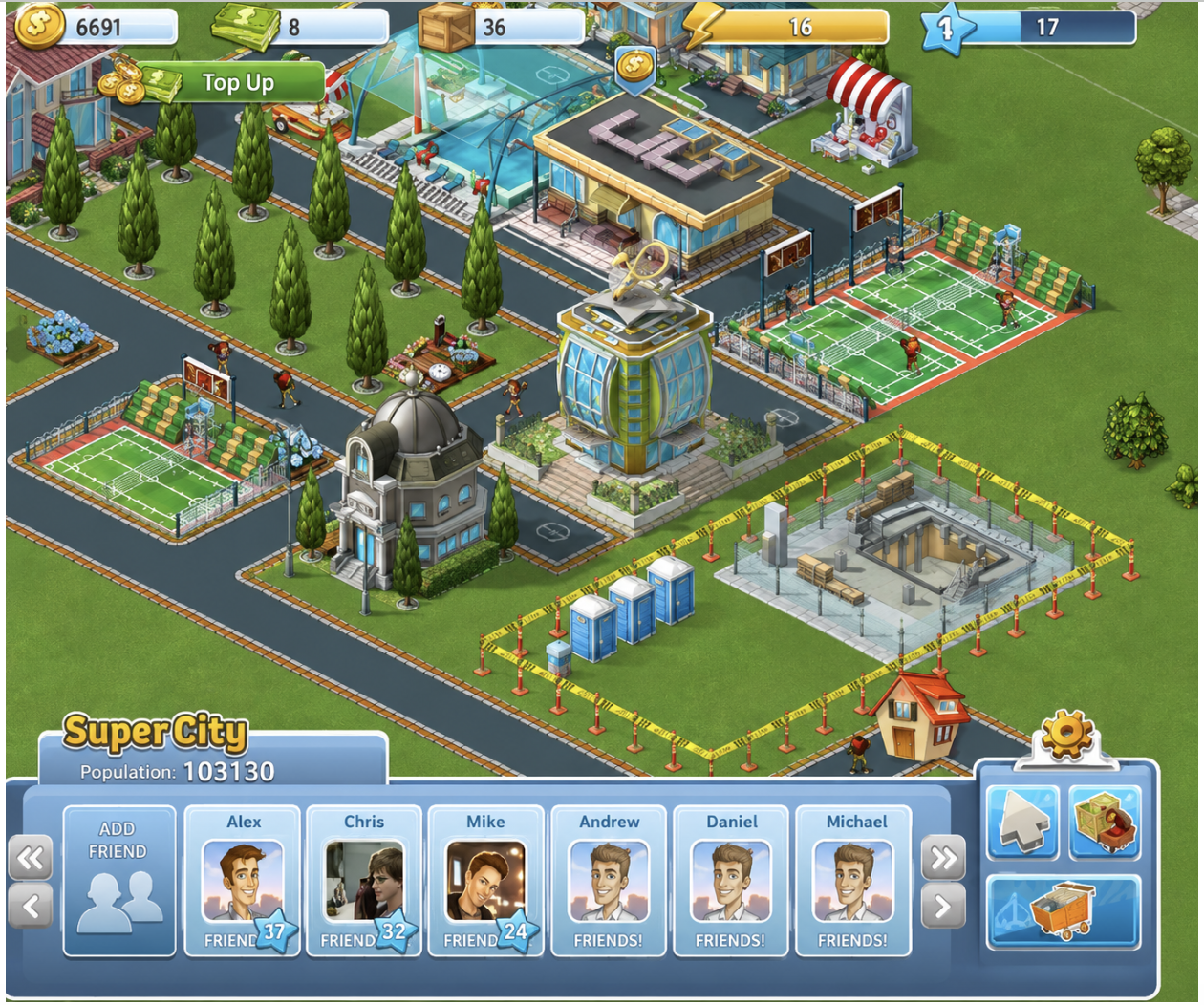
This approach became SuperCity’s first major difference from the many social farming games and city-builders of the early 2010s. Much of the market was built around repetitive economic loops: produce a resource, transform it and invest it into the next upgrade. SuperCity made its core loop more meditative and added “super stories” – chains of quests centered on helping characters. Players did not simply expand their cities; they turned potential “monsters” into neighbors.
Early Growth and the Problem of Success
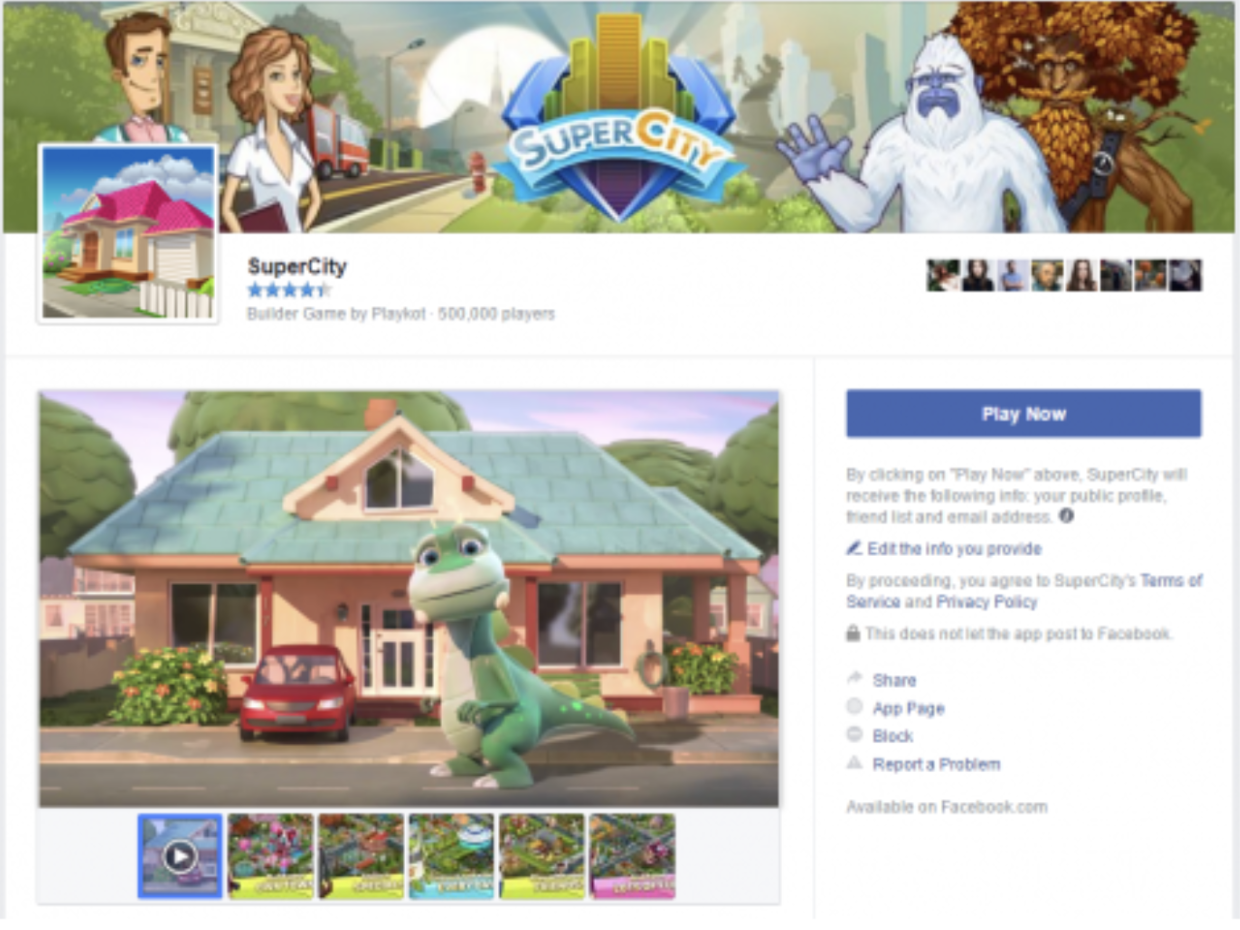
The launch on Facebook in 2014 marked the project’s international growth. SuperCity received industry recognition as one of the year’s best new social games, while its popularity led to advertising integrations with major brands, whose buildings became part of players’ cities.
But scale quickly created a new problem. The audience consumed content faster than the small team could produce it. The developers had to establish regular delivery cycles, expand the team and gradually move toward what today would be described as a full LiveOps model.
This model worked for several years, but by around 2017 the project faced two threats at once. Players had learned the recurring mechanics, while the social games market was rapidly losing ground to mobile. At the same time, the end of Flash support was approaching – the technology on which the game had been built. For many browser-based projects, this became a point of closure.
The team itself was not certain that SuperCity would survive the transition. However, instead of gradually winding the product down, Playkot continued to invest in it. The game migrated from Flash to HTML5, the team strengthened its analytics capabilities and began making more decisions based on data: examining what genuinely engaged players, developing parallel gameplay loops and investing not only in new offers, but also in new modes.
This period is important for understanding everything that follows. SuperCity became an evergreen product not because it once discovered a flawless formula. On the contrary, the feeling that the game “would always be there” emerged only after several crises. Each time, continuing required the team’s belief, investment and willingness to change the product alongside the market.
Expeditions as the Second Layer of Gameplay
The most successful product hypothesis emerged at the turn of 2019–2020.
The team revisited the game’s core gameplay and introduced Expeditions – standalone story-driven adventures with their own maps, objectives and progression systems.
According to Lera Fedorova, this was not just another event, but an entirely new gameplay layer. Expeditions had a significant impact on the game’s long-term revenue, after which the team continued to develop the format: adjusting their duration, testing new map types and turning what began as an experiment into a sustainable part of the product.
The first version of the mechanic was built by a dedicated team in approximately two months. Later, SuperCity’s experience became one of the inspirations behind Spring Valley, Playkot’s standalone expedition-based game.
Another successful hypothesis was the introduction of Suburbs – a resettable location designed for high-level players. There, players rebuild villages and earn resources for their main city.
This layer solves a common challenge for mature content-driven games: the most engaged players consume major updates very quickly, while continuously producing large amounts of handcrafted content becomes prohibitively expensive. Suburbs gave experienced players meaningful activities between major releases and gradually became a stable source of revenue while requiring very little ongoing content production.
How a City Builder Became a LiveOps System
In its early years, SuperCity was first and foremost a city-building game. As long as players had enough core content to progress through, there was little need for a rich calendar of live events. A fully-fledged LiveOps model began to emerge once a significant portion of the audience reached the end of the available progression.
Today, the event calendar is designed around multiple time rhythms. It includes:
- one long-running flagship event;
- accompanying gacha activities;
- short-term offers;
- one-day mechanics;
- monthly gameplay cycles.
Even periods without a major event are planned deliberately as “rest days,” allowing players to check in for offers without feeling compelled to participate in an intensive competitive event.
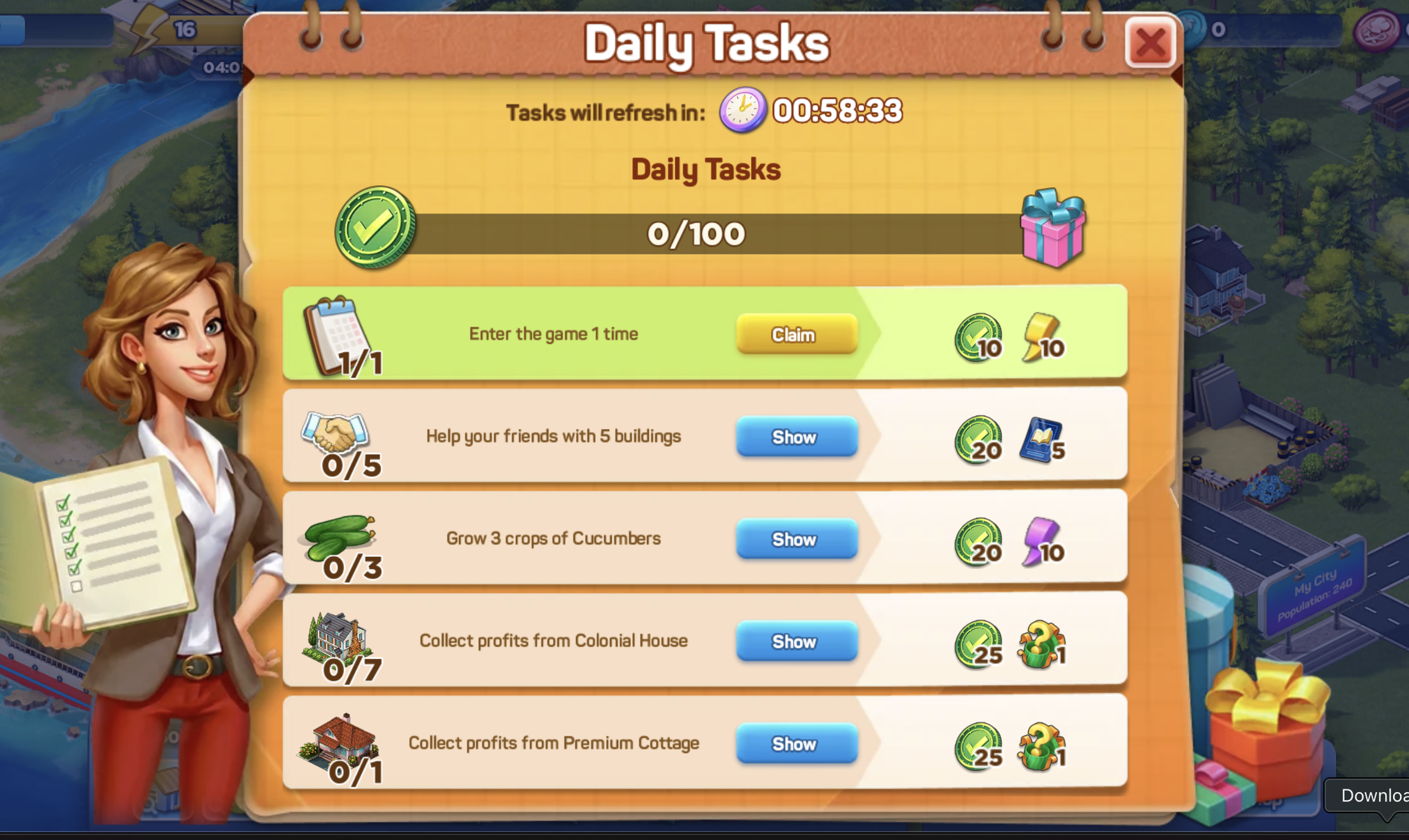
Where the game once featured only two events per month with long breaks between them, the studio now delivers around 15 releases every month. The objective is not to fill every minute with activity, but to align the monthly, weekly and daily gameplay rhythm with players’ habits. This calibration did not produce one dramatic growth spike. Instead, it made the game’s performance significantly more stable and predictable over time.
An Audience That Grew Up Together with the Game
Over fifteen years, part of SuperCity’s audience has quite literally grown older alongside the game. Many people have been playing for years, and some have remained since launch. For them, SuperCity has long ceased to be just entertainment. It has become a familiar place where they relax, socialize and maintain relationships with other members of the community.
According to Lera Fedorova, players used to value novelty and a constant stream of new experiences more strongly. Today, for many of them, SuperCity has become “an island of calm” – a place built around familiar rituals and routines. New players also arrive for reasons that go beyond city building alone. Expeditions and story-driven adventures increasingly attract people who are looking for engaging narratives as much as construction gameplay.
These habits directly influence development decisions. Unlike many mobile games, SuperCity often sees higher activity on weekdays. Part of its core audience spends weekends with family, while during the working week they meet friends inside the game. The event schedule and release calendar are carefully adapted to this pattern.
The team also pays close attention to interface design: contrast, font sizes, button placement and the clarity of payment-related actions. For a mature audience, it is particularly important to understand whether an action is free or paid. An unexpected change to a familiar interaction pattern may not improve conversion—it may instead damage the trust that has been built over many years. As a result, the studio often follows an internal rule of thumb: 70–80% familiar experience, 20–30% new experiences.
Why You Can’t Simply “Maintain” a 15-Year-Old Game
The word “maintenance” creates the impression that all a mature game needs is to keep running and receive regular content updates. In SuperCity’s case, that approach would have led to gradual decline. Today, the game competes not only with other city-builders, but with the entire entertainment landscape – from modern mobile games to streaming services and short-form video. To continue earning players’ time and attention, the product has to keep evolving.
At the same time, the game’s age introduces challenges at every level.
Over the years, SuperCity has accumulated more than a thousand architectural buildings. The team must continuously discover new landmarks, account for the preferences of players from different countries and ensure that rewards remain meaningful.
City space is limited, so the studio cannot simply keep adding large buildings indefinitely.
Production has also evolved. Unique handcrafted expedition maps were gradually replaced with modular biomes, which proved to be less expensive to create while also being better received by players.
The game’s economy has gone through a similar transformation.
Over fifteen years, inflation emerged, multiple currencies accumulated, and many resources that were valuable to new players became almost useless for veterans. Restoring the balance of the game’s primary hard currency took approximately a year and a half. The team simultaneously adjusted both the sources through which players earned it and the ways they could spend it. Denis Adlerberg jokingly refers to this process as “SuperCity’s Central Bank mode.” Behind the joke lies an important principle: In a mature game, there is rarely a single “killer feature” capable of fixing a systemic problem. Instead, sustainable improvements come from many carefully coordinated changes.
The Next Chapter: Not Heroic Efforts, but Continuous Evolution
The next stage of SuperCity’s development is built around moving away from a model where the team has to deliver one massive product breakthrough every six months.
Instead, the studio aims to establish a steady flow of smaller but meaningful improvements:
- enhancing existing game modes;
- modernizing monetization systems;
- adopting successful ideas from the wider mobile games market more quickly;
- and continuously investing in quality-of-life improvements.
Another important focus is bringing former players back while finding new audiences similar to today’s core community. Reactivation campaigns deliver results, but their potential is naturally limited – you cannot bring the same player back forever.
The long-term challenge is therefore to become better at identifying people for whom SuperCity can become the same familiar place that existing players have been returning to for years. Today, large ideas are validated through small MVPs. If a new mechanic resonates with players, the team quickly expands it across the game. One example is the ability for players to choose their preferred reward. The feature was first tested within a limited set of offers. After receiving positive feedback, it was rolled out across numerous gacha events and other game systems.
Behind $100 million in bookings and 15 years of operation is not one brilliant mechanic.
It is thousands of product decisions about what to preserve, what to change and when to resist the temptation of a dramatic overhaul.
SuperCity has survived platform transitions, the death of Flash, multiple generations of developers and the transformation of its audience.
Its story demonstrates that an evergreen product is not a game that became successful once and simply refused to die. It is a product that learns, again and again, how to remain true to itself in a constantly changing world.