Nvidia's CEO asserts that detractors are "completely wrong" regarding the DLSS 5 technology
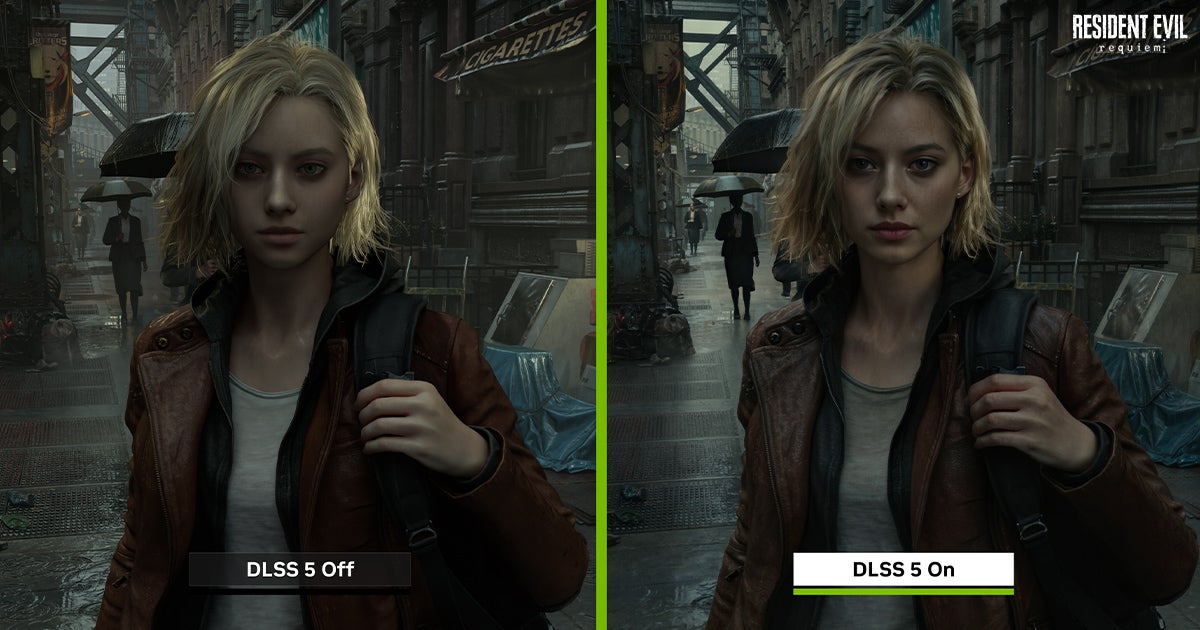
The introduction of DLSS 5 by Nvidia has sparked controversy with some industry observers, prompting CEO Jensen Huang to address the claims head-on. Huang asserted that those opposed are "completely wrong" regarding their belief that DLSS 5 affects artistic control in game design.
Nvidia recently announced its latest technology, termed DLSS 5, which they hail as an "AI-powered breakthrough in visual fidelity" due to its use of "neural rendering."
Among the supporters of DLSS 5 are major developers such as Bethesda, Capcom, NetEase, NCSoft, Tencent, Ubisoft, and Warner Bros Games. These developers showcased the technology in a recent tech demo.
Despite the excitement, some critics have harshly reviewed DLSS 5, arguing that it imparts an AI-produced gloss to character models, which they claim detracts from creativity, especially demonstrated by the side-by-side comparison in Resident Evil: Requiem.
At Nvidia's annual conference, during a question and answer session with the press, Jensen Huang was questioned by Tom's Hardware regarding this critical feedback.
Huang defended DLSS 5 by saying, "The critics are entirely mistaken because, as I have explained, DLSS 5 integrates generative AI with the geometry and textures, retaining complete control over these elements."
The CEO emphasized that game developers have the ability to "fine-tune the generative AI" to align with their artistic vision, maintaining that DLSS 5 does not compromise creative control.
He further explained, "It isn't about post-processing at the frame level but involves generative control at the geometry level. The artistic control remains in the game developer's hands, marking a departure from other generative AI. This is why it is referred to as neural rendering."