"Given the significant increase in iron prices, we anticipate a rise in demand for cloud gaming," said Alexander Mikheev from VK Play regarding the results of 2025
We continue to summarize the year 2025 with gaming teams and experts. This time, we spoke with Alexander Mikheev, head of VK Play.
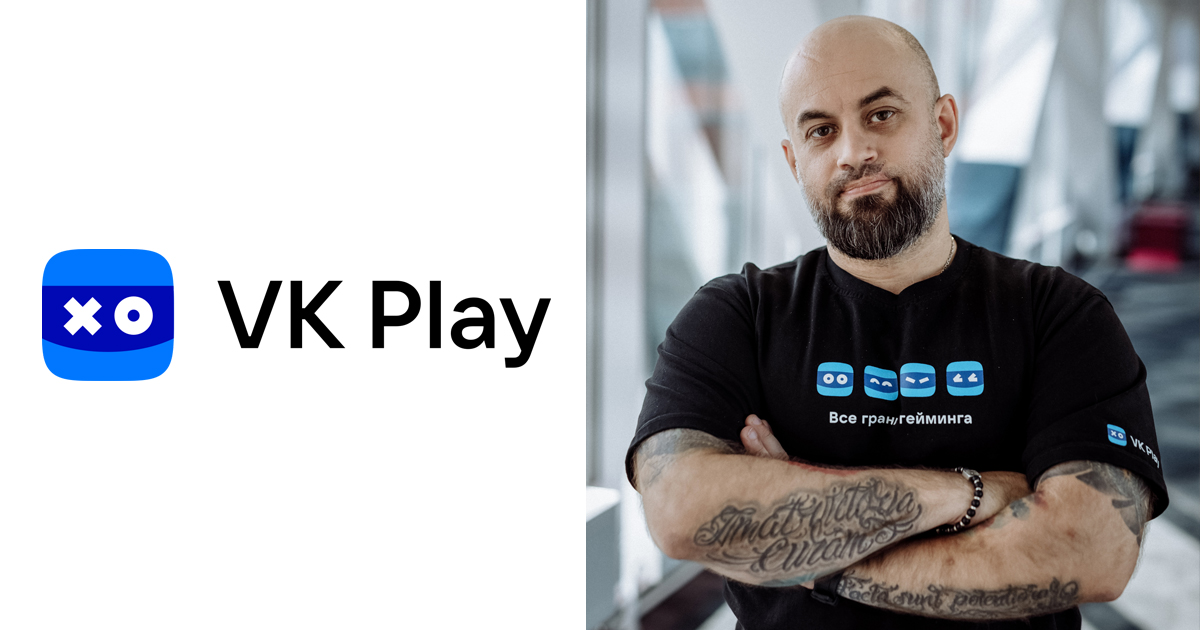
How did the year 2025 turn out for your gaming platform from a business perspective?
Alexander Mikheev, VK Play: The year 2025 was a period of organic growth and consolidation for our platform. Speaking of key metrics, we set a new record for daily audience, and we also saw positive dynamics in financial indicators. This is especially valuable in a market where major exclusive releases are still rare. Our focus on service and community development provided stable results.
How has the platform changed from a product perspective over the year? Why were specific changes implemented?
Alexander: From a product perspective, 2025 was a year focused on infrastructure and convenience—for both developers and players.
For developers, we concentrated on ready-made services that save time. For instance, we launched a matchmaking system. Now, there's no need to write complex algorithms for player matching—the platform itself finds opponents of comparable skill levels. Or leaderboards—it's easy to create scoreboards for different game modes, with VK Play handling data storage and all technical aspects.
We also enhanced the developer dashboard. We added detailed statistics on in-game time and users. We integrated an AI assistant for generating game descriptions and an image editor to quickly prepare promo materials. All of this helps studios and individual developers focus more on creativity rather than routine tasks.
For players, the main themes were accessibility and comfort. To make playing easier, we added an offline mode in the launcher and improved the search function, making it faster and more accurate. To make games more affordable, we implemented installment payments (BNPL) for games.
Cloud gaming is also worth mentioning. We launched the long-awaited "Storage" option in VK Play Cloud. Now, players can create their environment with programs and settings, which will load in every session—a true personalization in the cloud.
The logic behind all these changes is simple: we are removing technical barriers. We want developers to focus on creativity and players to focus on games, not the complexities surrounding them.
Did player behavior change in 2025?
Alexander: We see that users, in general, have been playing more—the male audience's playtime increased by 15%. Meanwhile, the female audience has been spending significantly more. Moreover, in 2025, the average check for women was higher than for men, although in total, they still spend less.
Our main segment, mid-core and hard-core gamers, is gradually aging, as is the entire market: we observe a gradual increase in the average age each year.
However, we also have services focused on a younger audience. For example, tournaments and cloud gaming. That's where players under 30 are concentrated.
What trends do you expect to strengthen or emerge within the platform in 2026?
Alexander: The most pressing issue for gamers right now is the cost of gaming hardware. Like other platforms, we analyze our users' device capabilities to help developers optimize their products. Data shows that many will need to upgrade in the next year or two. Amid a significant price increase, we expect a rise in demand for cloud gaming—this service remains largely unknown to most, but its current technical level, I'm sure, will pleasantly surprise gamers looking for an alternative to expensive PC upgrades.
The second trend we see (and it's global) is increasing market competition. A large share of players' attention is captured by long-lasting live-service games, a significant portion by major hyped releases, and thousands of smaller projects are competing for the remaining time and money.
In these conditions, it's crucial for developers to precisely define their target audience and work skillfully on engagement. As a platform, we will, in turn, develop tools that help in this interaction.
What can we expect from the platform in 2026?
Alexander: In 2026, we will continue to develop the platform for both developers and players.
For developers, we will focus on tools that help better understand the audience and work more effectively. This includes expanded statistics with game session analytics, flexible systems for managing different game versions and pre-orders, as well as new monetization and audience engagement mechanisms. Simultaneously, we plan to improve the user experience in the developer dashboard to make working with us even more convenient.
For players, we'll make the platform more open and personalized. We'll expand the list of games that can be bought and launched on both VK Play and other platforms, and continue to improve Steam account linking. We'll add gamification mechanisms, such as battle passes. And, of course, the catalog will become smarter—game selections will consider users' personal preferences.