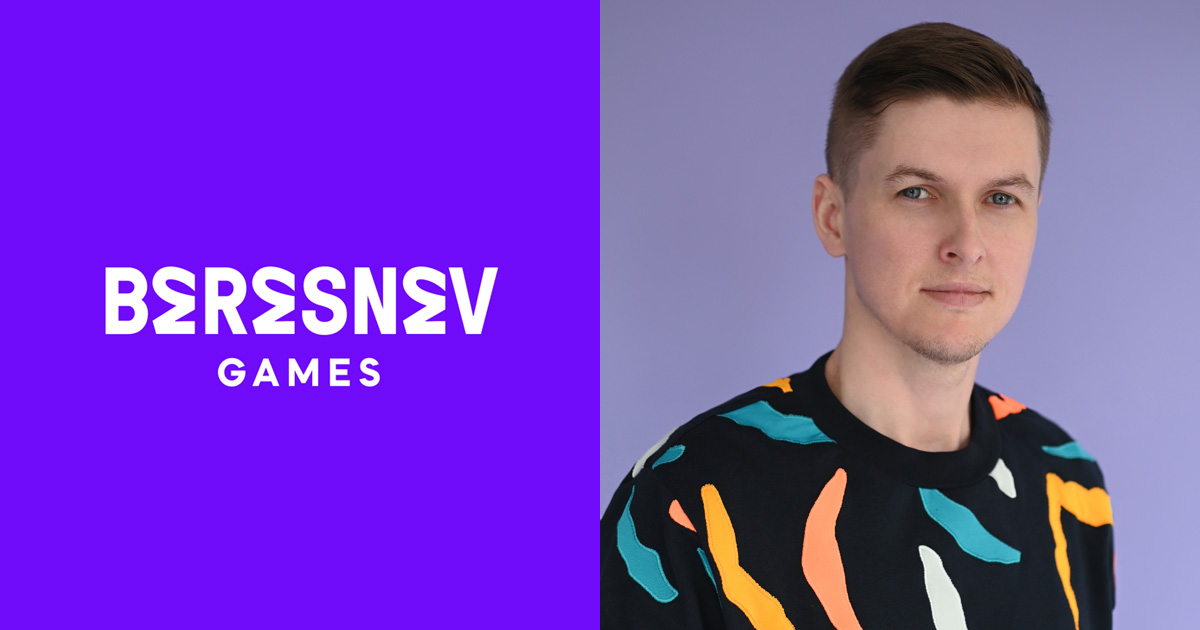
"Fully integrated AI into marketing and survived our own Larisa Dolina," says Oleg Beresnev of Beresnev Games on the outcomes of 2025
We continue to wrap up the year 2025 with teams in the gaming industry or related sectors. Up next is an interview with the founder of Beresnev Games, Oleg Beresnev.
How did 2025 turn out for your team? What did you manage to accomplish, what are you proud of, and what didn't you get to?
Oleg Beresnev, Beresnev Games: The year 2025 was one of deepening for the team, rather than extensive growth.
LiveOps for products
We have increased our focus on the lifecycle management, the economy of events, and their impact on retention and LTV. The team delved deeper into the product—not just at the level of individual mechanics, but at the level of the overall user experience.
Our main focus shifted to the core loop: its readability, depth, and sustainability. At the same time, we clearly realized that retention is an area that needs further strengthening, and it remains one of our key tasks.
Marketing and AI
In 2025, we managed to:
- restructure the creative direction;
- establish a shorter and faster production cycle;
- fully integrate AI into marketing.
In the last quarter, we started testing significantly more diverse marketing hypotheses, which resulted in noticeable efficiency improvements, as seen in our marketing metrics.
The Team
We are going through a natural maturation phase: ineffective decisions and unsuitable roles are being phased out, forming a team capable of working at the level of a mature product studio.
This is a challenging but necessary process.
What we didn’t manage to accomplish
- Not all internal tools and systems were brought to final completion.
- Some product hypotheses were consciously put on hold due to overload and shifting priorities.
What we are proud of
We withstood serious operational and legal pressure, you could say, survived our own "Larisa Dolina." As a result, our team became noticeably more mature—especially in areas like partnerships, risk assessments, and long-term decision-making.
What conclusions have you drawn as a development studio by the end of 2025?
Oleg: There are three key takeaways.
Expertise is the foundation of business
A strong studio is a sum of deep, diverse expertise: product, marketing, analytics, technology, LiveOps. Our goal is to systematically strengthen each of these areas.
Processes and data are critical
A successful studio is impossible without clean data and proper analysis. This year we invested a lot of time and resources into data quality and understanding what exactly we measure and how we make decisions based on it.
The market does not forgive amateurism and naivety
Miscalculations in partnerships, hiring, expectations, and risk assessments are extremely costly. The industry is maturing, and expertise and professionalism are becoming more valued and expensive every year.
Has the practice of interacting with publishers/investors changed? Has it become easier or more difficult to work with them?
Oleg: Yes, and this is a structural change in the market.
The market has shifted even more towards strong studios and quality products.
Teams that can manage not only development but also economics, LiveOps, marketing, and the long-term product development are engaging in a fundamentally different level of dialogue with partners.
For us, partnership means collaborative work where interests and responsibilities are balanced.
We have a clear understanding of how to build an open, honest, and productive cooperation model and the value we can create. We are increasingly viewing the market from the position of those who can not only create products but also take responsibility for their development and growth. This perspective shapes how we evaluate potential partnerships and cooperation formats.
How was the year for the niche/genre you operate in?
Oleg: The year 2025 was one of resetting expectations for our genre.
High CPI and the rising cost of acquisition have made mistakes extremely expensive: there is less room for unsuccessful hypotheses, weak data analysis, and long iteration cycles on the market.
Under these conditions, the teams that survive and grow are those who:
- can work on retention, not just acquisition;
- build long-term economics and understand the lifetime value of a user;
- can manage the product post-launch.
The ability to carefully and strategically manage a product, develop it through LiveOps, content, and economy comes to the forefront.
What trends in your niche/genre do you expect to strengthen or emerge in 2026?
Oleg: I see four trends.
- Further strengthening of LiveOps
LiveOps is firmly becoming the foundation of the product, not just an additional layer. Teams that can plan content, events, and economy months in advance will prevail.
- Personalization and segmentation
Universal solutions for the entire audience are working less effectively. The importance of segmented content, personal offers, and adaptive gaming experiences is growing.
- Careful evolution of successful formulas
Instead of abrupt experiments, the market is moving toward the thoughtful development of already proven mechanics. Small, precise improvements are becoming more effective than radical changes.
- Market consolidation
Weak and unprepared teams will exit. Studios with strong expertise, processes, and resilient products will continue to strengthen and take larger market shares.
What are the team’s plans for the coming year?
Oleg: Further development of LiveOps as a systemic part of the product.
Strengthening work on retention, the core loop, and economy.
Investing in team expertise and process quality.