"We bet on localization surviving — and it worked," says Pavel Tokarev from Inlingo on the outcomes of 2025
We continue, along with top managers and experts from the gaming industry (and adjacent industries), to sum up the results of 2025. Next in line is an interview with Pavel Tokarev, the founder of the game localization company Inlingo.
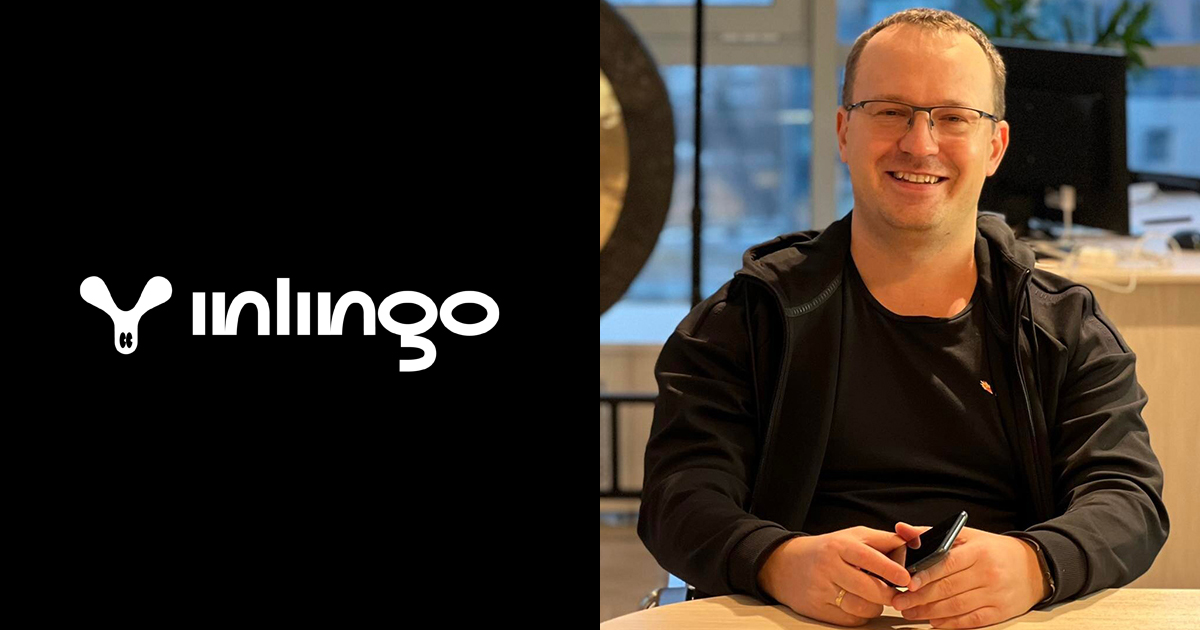
How was the year 2025 for your outsourcing company? Which areas developed most actively?
Pavel Tokarev, Inlingo: The year was challenging. But, as the founder of Y Combinator once said, "a good entrepreneur is like a cockroach — when poisoned, he eventually starts feeding on poison." Colleagues from related fields said it was time to shut down the localization department and do something else. However, this year we bet on localization surviving — and it paid off. A colleague's joke that I’d need to become a taxi driver or boat operator hasn't come true yet. My forecast: we'll definitely keep working next year and might even grow.
The team was ready to fight to the end. Contrary to expectations and the growing influence of AI, I focused on localization. We've adapted to the new realities and begun using artificial intelligence to strengthen our quality. For us, a human touch will always be key. The involvement of a human linguist changes depending on the task — from 30 to 90%. But this year, we were able to enhance the quality of our products and learn to work symbiotically with AI.
At the same time, we moved away from the art direction. I didn't solve the challenge of scaling it, of growing art leads and directors. This area was even more impacted by AI. What used to be outsourced is now done internally using artificial intelligence and then polished in-house. Instead of art, our QA direction took off. Now we are implementing testing for PC, console, and mobile projects.
How did the game outsourcing market change over the course of 2025?
Pavel: The localization market transformed. The classic tech process, where translation and proofreading are done by humans, remains, but primarily for premium games with high LTV. These are usually long-term console or Steam projects where content is a strong gravitational force for user retention and a requirement from platforms.
The next cohort includes projects that want to cover as many markets as possible, including those that do not show the highest results. For them, a hybrid approach emerged: machine translation with subsequent human polishing. It's important to consider that there are languages with which neural nets struggle — for example, Chinese, Korean, or Japanese. For them, the traditional tech process is still relevant.
How has working with clients changed? What shifts have you observed in orders, requirements, wishes, and budgets?
Pavel: For clients who have switched to fully machine translation, we introduced our own AI verifier, which allows us to assess the quality of AI translations across different languages. In 2026, we will decide whether to keep it as an internal product feature on the backend and enhance it, or to release it as a standalone product. Time will tell.
Personally, I notice that neural networks are becoming more powerful, yet the number of hallucinations isn't going away. I recently heard this phrase: "AI helps explain an infinite reality with a limited number of tokens." Any neural network implies a certain number of bugs in the final result — and that's normal. However, there are projects where the quality bar is very high: it is crucial to maintain the game's image and avoid any hallucinations. For clients who do not want machines used in the tech process, we created an anti-AI check. With its help, we closely monitor how closely the vendor's translation aligns with machine translation, to avoid any bugs.
What were the deciding factors for successful outsourcing in 2025? Which niches, on the contrary, contracted?
Pavel: Scalability of work without increasing costs is one of the keys to growth. There is an increasing demand for seamless work in "one window" or "one button" mode. Large pipelines and lengthy communication on tasks are gradually giving way to speed and process automation. Our plans are to delve into working with large service products without scaling the management team.
What conclusions did you draw from operating in 2025?
Pavel: The main takeaway is not to live in the past and not to look back at old models. Not everyone is ready for change. Many look back and wish the gaming localization market would return to the positions of 2020-2022. But we all understand that the "helicopter" money is over; it's time to admit to ourselves that not all products need perfect localization by top specialists. There won't be a situation anymore where a hyper-casual game needs high-art translation by a native speaker, reviewed by an editor and proofreader — there are simply no budgets for that.
What trends in outsourcing do you expect to strengthen or emerge in 2026?
Pavel: We anticipate a continued trend towards AI integration and, hopefully, the rationalization of its use. Many in the market think AI is a magic pill that will reduce costs while maintaining the same level of delivered content. But that's not the case. The quality of the content will be different, but understanding what level of content the client and their product need is our responsibility. Our main task is resource optimization for the client, which we successfully fulfill.
What goals and plans does the company have for 2026?
Pavel: Future plans: refine the tech process, offer a good price while maintaining excellent service. Our goal is to provide the best user experience. In this regard, we continue to grow consistently year by year, and we'll keep doing so — there is no limit. We hope 2026 is better than the previous year, but we don't rule out a conservative scenario, so we always keep our pulse on the situation and maintain a stabilization fund.
This year, I focused on personal branding, launched a Telegram channel as an entrepreneur's diary. I share the crises I've encountered and how I overcame them. I aim to leave a digital footprint for the next generation of Inlingo and other entrepreneurs who might find my experience useful. The project is entirely non-commercial, with no plans to sell courses. Perhaps, in the future, I'll transform this format into a new book: how to build an outsourcing studio without investments, "eat dirt", and survive in such harsh turbulence.
We are continuing to develop the inlingo Talks project — our collection of interviews with gaming industry professionals. Soon, we'll be posting a book on our website in an online format for everyone to read. And, of course, we'll be reissuing the print version — I've heard it’s great reading material on a plane on the way to a meeting or conference.