The head of Suspicious Developments advised indie studios not to rush their growth and not to spend too much time on prototypes
Tom Francis is the founder and head of the British studio Suspicious Developments, which created the games Gunpoint, Heat Signature, and Tactical Breach Wizards. In his blog, he gave some basic advice to indie teams.
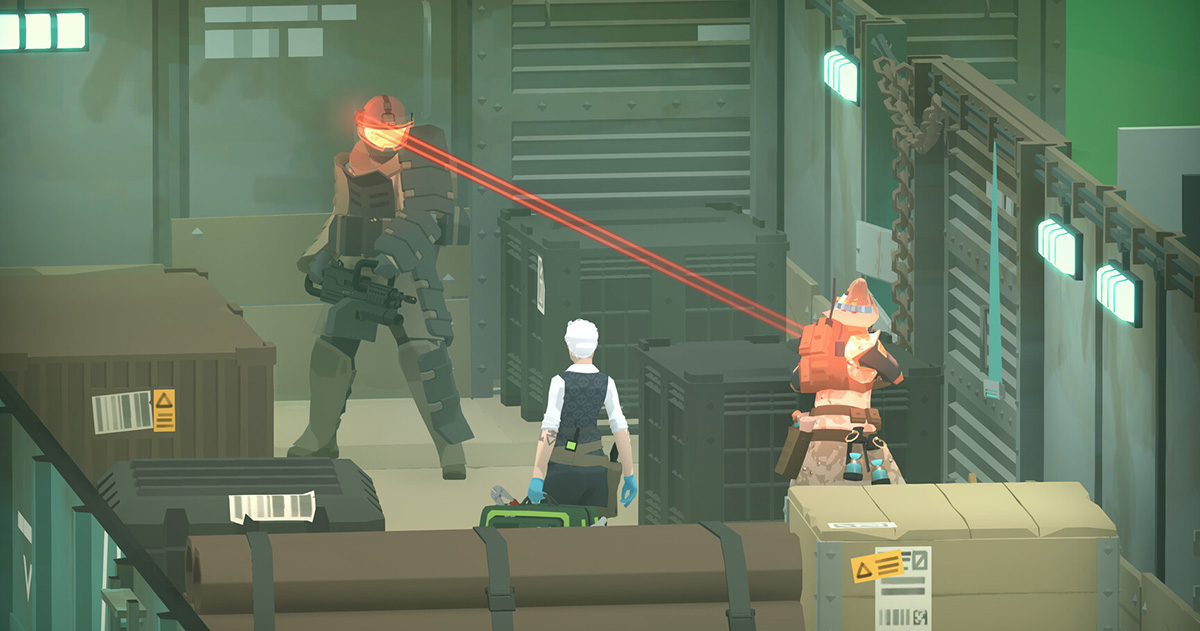
Tactical Breach Wizards
Before getting to the advice, Francis noted that his studio's debut game — Gunpoint — sold well largely due to luck. It was released in 2013 when the market was not yet overloaded with indie games, but they were already starting to generate decent revenue for their creators. Nonetheless, Suspicious Developments later repeated its success. All its subsequent projects managed to more than double their expenses, providing the team with the means to continue existing.
"Our first success wasn't something unique, whereas our ability to continue working and maintain independence is becoming more rare. So I can share some advice on how to make the most of the resources you have," wrote Francis.
Below are the tips themselves.
1. Stay as small a team as possible
Active hiring rarely contributes to the success of indie studios, according to Francis. Expanding the staff significantly increases the financial burden, and the development speed doesn't always increase as a result.
"Success is when you earn more than you spend. Doubling the size of your team means you now need to earn twice as much. However, as these figures grow, it turns out that fewer games are capable of generating such revenue, so the chance of success can drop not just by half but to a tenth," explained Francis.
2. Work on games for which a prototype can be quickly made
According to Francis, prototyping is an important stage in game development and should not be delayed. It allows you to understand whether an idea is viable and abandon it if necessary. If an idea can't be implemented as a prototype, Francis notes, it may not be suitable for an indie game.
3. Be sure to test
Francis himself calls testing a "magic wand." He is convinced that after creating a full-fledged prototype, you can start showing it to other people: initially, at least to friends. As soon as the studio has something that truly resembles a game, large-scale testing among gamers can begin. The more testers, the better. The developer emphasizes that if you can't get at least 100 people interested at this stage, it says a lot about the project.
4. Be flexible with the game's price and don't be afraid to undervalue
As Francis explains, Suspicious Developments determines the price by simply polling gamers. Whichever option gets the most votes, the studio sets that price. According to the developer, this method has never failed his team.
Moreover, Francis admits that he doesn't see the point in setting a high price just because game development took a lot of time and effort from the studio.
"The audience is essentially infinite, and prices are elastic within reasonable limits. So if players think your game is worth $20 and you decide to charge $10, you'll sell about twice as many copies but earn half as much on each — meaning the revenue will be the same. If you set the price at $30, you might sell fewer copies at the higher per-unit price, but this could potentially harm your rating and decrease word-of-mouth. If you ask for $40, then damage is guaranteed. In that case, you risk moving beyond the 'reasonable boundaries' where nothing is guaranteed," concluded Francis.