"Archmagic Survivors Magic TD surpassed the one million dollar revenue mark even before its global launch," said Ivan Fedyanin from Playducky on the results of 2025
Together with top managers and experts from the gaming industry, we continue to sum up the results of the year 2025. Up next is an interview with Ivan Fedyanin, co-founder of Playducky.

How did 2025 turn out for your business? What achievements can be highlighted? What conclusions have you drawn?
Ivan Fedyanin, Playducky: 2025 was a year of restructuring and strengthening focus for us. The principle of speedy decision-making and implementation remains part of our DNA. However, it became evident over the year that deep expertise in specific genres is more valuable than attempting to handle everything at once.
The main achievement of the year was the transformation from hyper-casual publishing to hybrid-casual and IAP-oriented publishing. For us, hyper-casual is largely a thing of the past. We’re rethinking and developing hybrid-casual projects in new iterations—from puzzles to idlers. As for the IAP model, it continues to prove its robustness through metrics, and we are consciously betting on it.
Among the key achievements of the year was the launch of Archmagic Survivors Magic TD: by December, the project surpassed the one-million-dollar revenue mark even before the global launch, strongly confirming the product's potential and chosen market strategy.
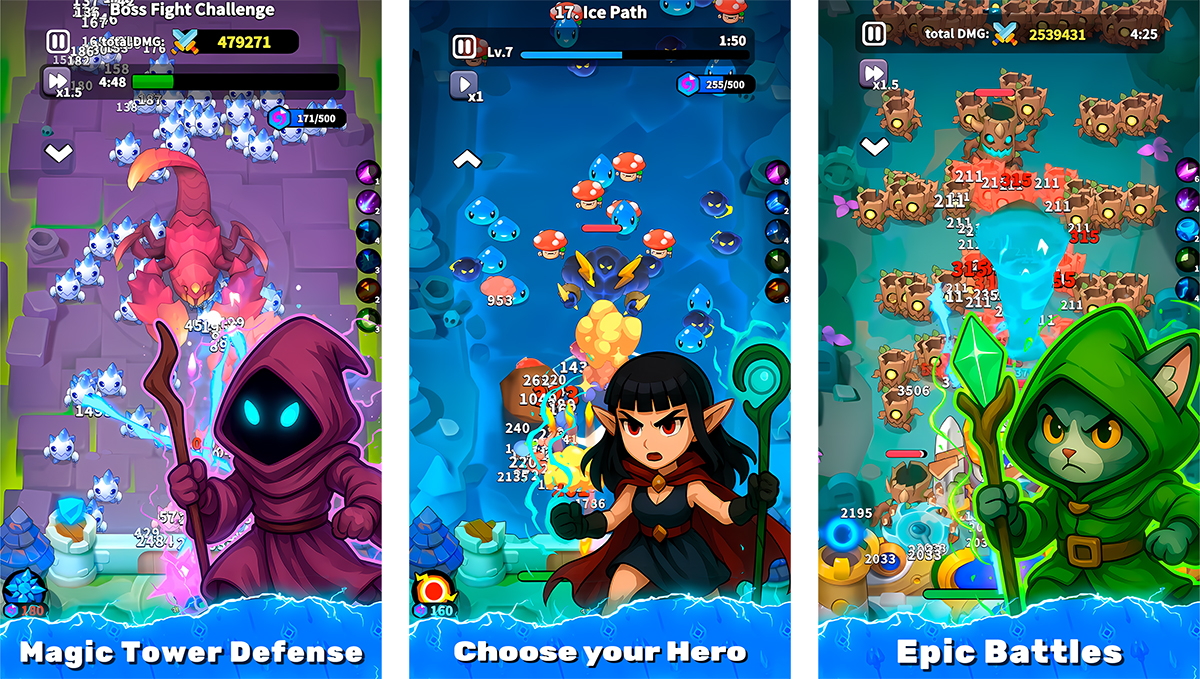
Archmagic Survivors Magic TD
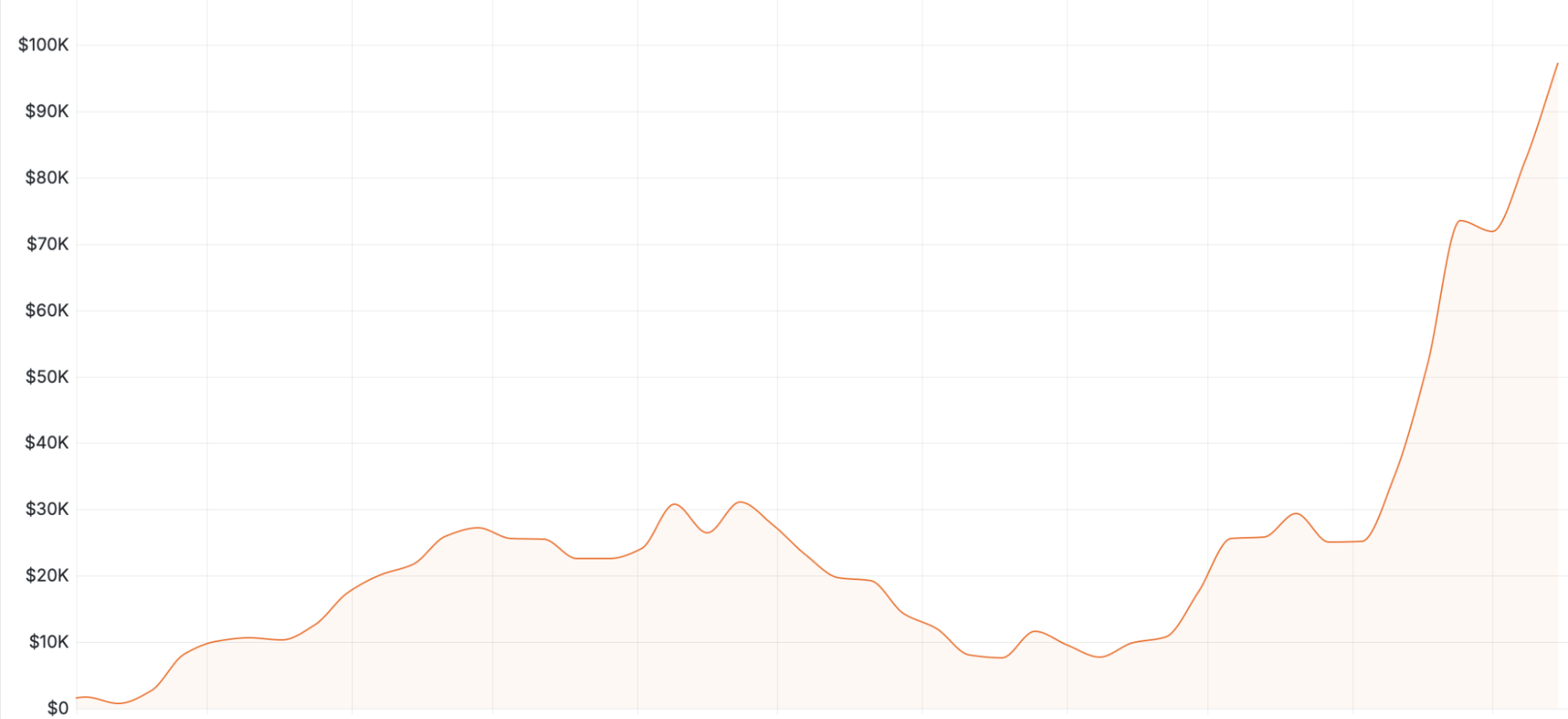
Metrics of Archmagic Survivors Magic TD
In your view, how has the situation in the gaming market changed for publishing?
Ivan: Throughout the year, we observed that the competitive market, in the long run, "naturally allocates" publishers to niches: attempting to enter a new genre can be either a justified risk or a mistake—especially without accumulated expertise.
Today, we believe the market moves along two trajectories:
- The conveyor of prototypes in search of the "ideal hit";
- Targeted work in selected genres, where the team systematically iterates, gathering experience, features, ideas, and expertise.
We are steadily moving toward the second approach: emphasizing repeatability, predictability, and quality of results, relying on expertise rather than randomness.
We also note the emergence of new strong players from regions "unexpected" for the industry, such as Vietnam.
Have practices in working with developers changed? Has it become easier or harder to work with them? Perhaps they themselves have changed in some way?
Ivan: Working with IAP-oriented projects requires a higher level of publisher presence in daily development—this has been a key change for us. In such products, the economy, content cycles, LiveOps, and execution quality are particularly important—and our involvement here directly impacts the results.
This involvement has already borne fruit: more systematic event planning and execution, more precise planning, and hence an advantage in product economy.
Easier or harder? Changing and establishing processes is always challenging, but ultimately a well-set system makes work easier for all parties—involving developers, publishers, and the product team.
How was the year for the niche where you usually release games?
Ivan: Our project Melon Sandbox continues to grow and develop actively, gathering around itself an ever-expanding community of mod creators and players. We observe that the direction of user-generated content (UGC) is becoming an increasingly significant driver of retention and growth—and this is confirmed not only by audience interest but also by the ecosystem's economy.
In 2025, total payouts to mod makers in Melon Sandbox nearly reached one million dollars—a crucial indicator for us of the platform's maturity, creator involvement, and the community's strength around the project.
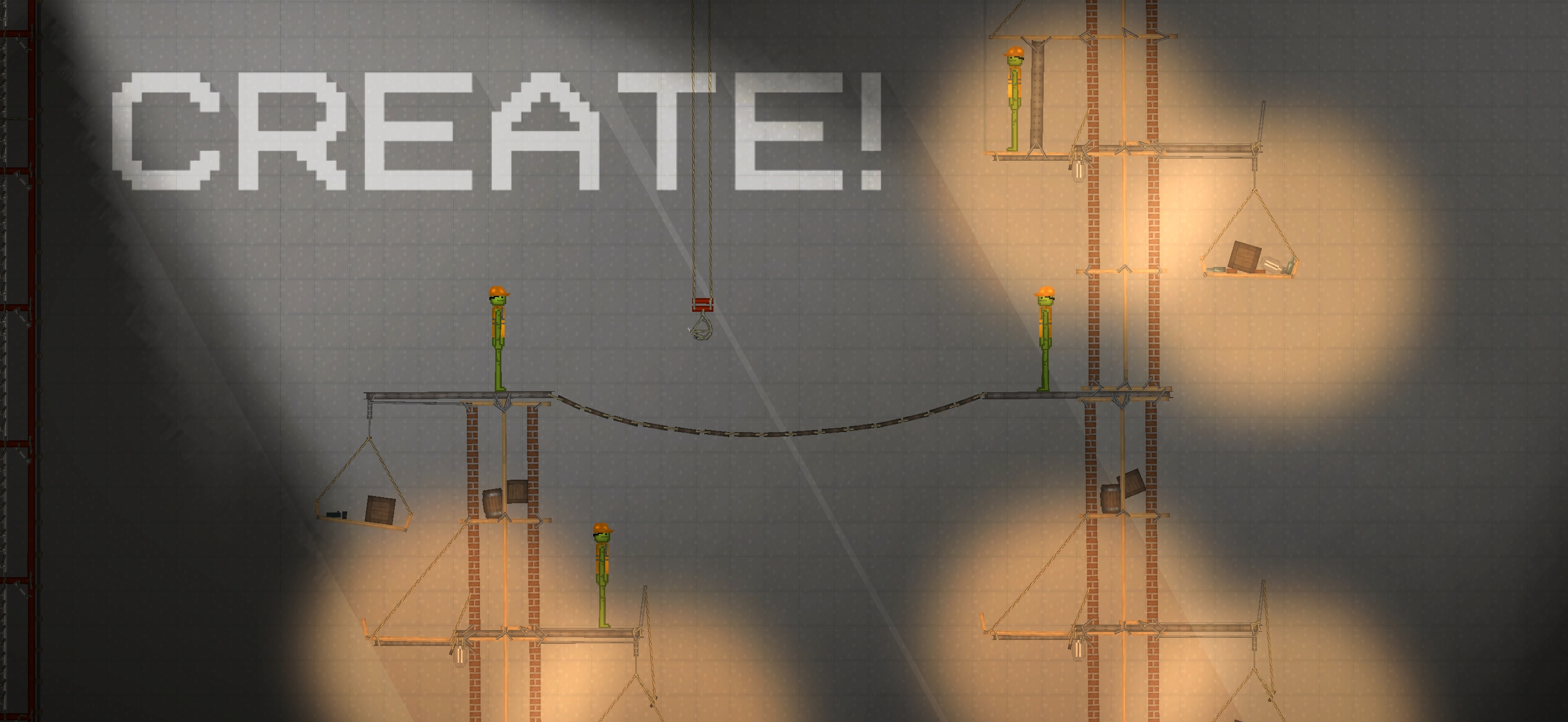
Melon Sandbox
We realized that being good at publishing does not equate to being good at developing. We closed several internal development directions; Telegram games did not justify themselves, and games for traditional stores did not achieve the required results. Development teams need their own space for errors without oversight from above.
What conclusions and lessons from 2025 would you highlight for developers preparing for release?
Ivan: The key lesson is that preparing for release should be like preparing for the start of a marathon, not the finish. In 2025, the teams that won the most were those that initially thought of the product as a system for months ahead, not just as "version 1.0."
Our key recommendations:
- Plan the content and event cycle in advance: what happens post-release in weeks 1/2/4, how interest is maintained, and how LTV grows.
- Do not "prop up" the product at the last minute—work systematically with metrics: retention, engagement, economy, payer conversion.
- Focus on the first 5–10 minutes: onboarding, tutorials, initial player goals. This is where it is decided whether the product has a chance to scale.
- Have a clear testing plan: which hypotheses are tested, what KPIs are passable, and what actions to take in each scenario.
- And finally: it's better to honestly choose a genre/niche and delve into it than trying to create a product "for everyone."
What trends do you expect to strengthen or emerge in your niche in 2026?
Ivan: We expect the strengthening of several directions.
Firstly, the growing role of LiveOps: events, seasons, regular updates, and content cycles are becoming a foundation for retention and monetization, especially in the IAP model.
Secondly, there will be further specialization in genres among publishers and studios. The winners will be those with repeatable expertise and a decision-making system, not just sporadic successful launches.
Thirdly, UGC and community mechanics will continue to develop: tools for creators, content exchange, and social loops—all of these significantly influence growth and long-term metrics. It’s important to note that this trend is also confirmed by major players: for example, one of the market leaders—Genshin Impact—has turned towards UGC content, further validating our focus on this direction.
Finally, the hybridization of genres will continue, but with fewer "superficial mergers" and more thoughtful implementations that are economically viable and understandable to the audience.
What are the company’s plans for 2026?
Ivan: In 2026, we plan to invest more in projects to give teams the necessary growth, thereby strengthening our market position—and possibly opening up a new niche or sub-genre for ourselves.
We are ready to offer experienced teams support for creating their MVP, as well as funding for teams that already have a product but have hit a financial gap for various reasons and need help to reach the global market.
For the year's focus:
- Deepen expertise in hybrid-casual puzzles and idlers;
- Continue to develop IAP project directions;
- Further strengthen products where IAP and LiveOps, along with community and UGC ecosystems, play a key role.
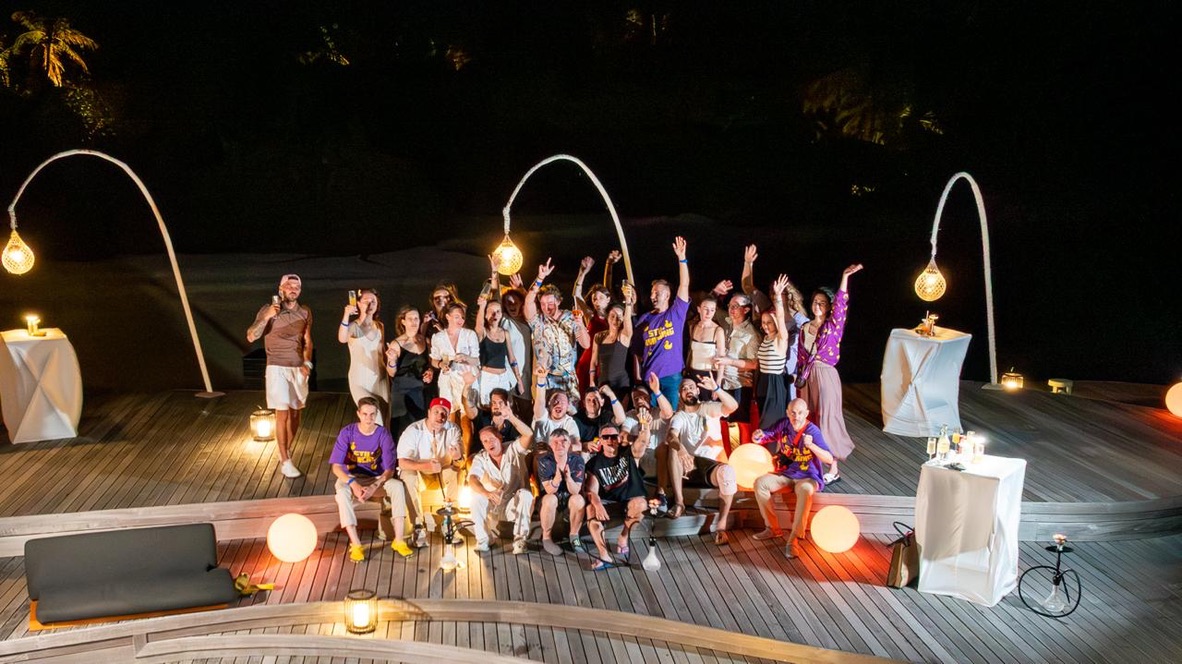
And of course, there is also an internal goal: to go on a cool company retreat with the whole team. In 2025, we already managed to visit Georgia and the Maldives. We want to maintain this tradition in 2026.