"There's been a 20% increase in the number of returning corporate clients," says Denis Shergin of UNIGINE about the main events of 2025
As winter holidays continue, we are wrapping up the 2025 year with teams and speakers related to the gaming industry. Next up is an interview with Denis Shergin, the CEO of UNIGINE.
What kind of year was it for the engine as a service?
Denis Shergin, UNIGINE: Compared to last year, the number of returning corporate clients increased by 20%, which is certainly pleasing — it indicates that we provide a useful and convenient SDK.
However, it's important to note that our flagship UNIGINE 2 Sim is primarily a 3D platform for C++/C# industrial project development:
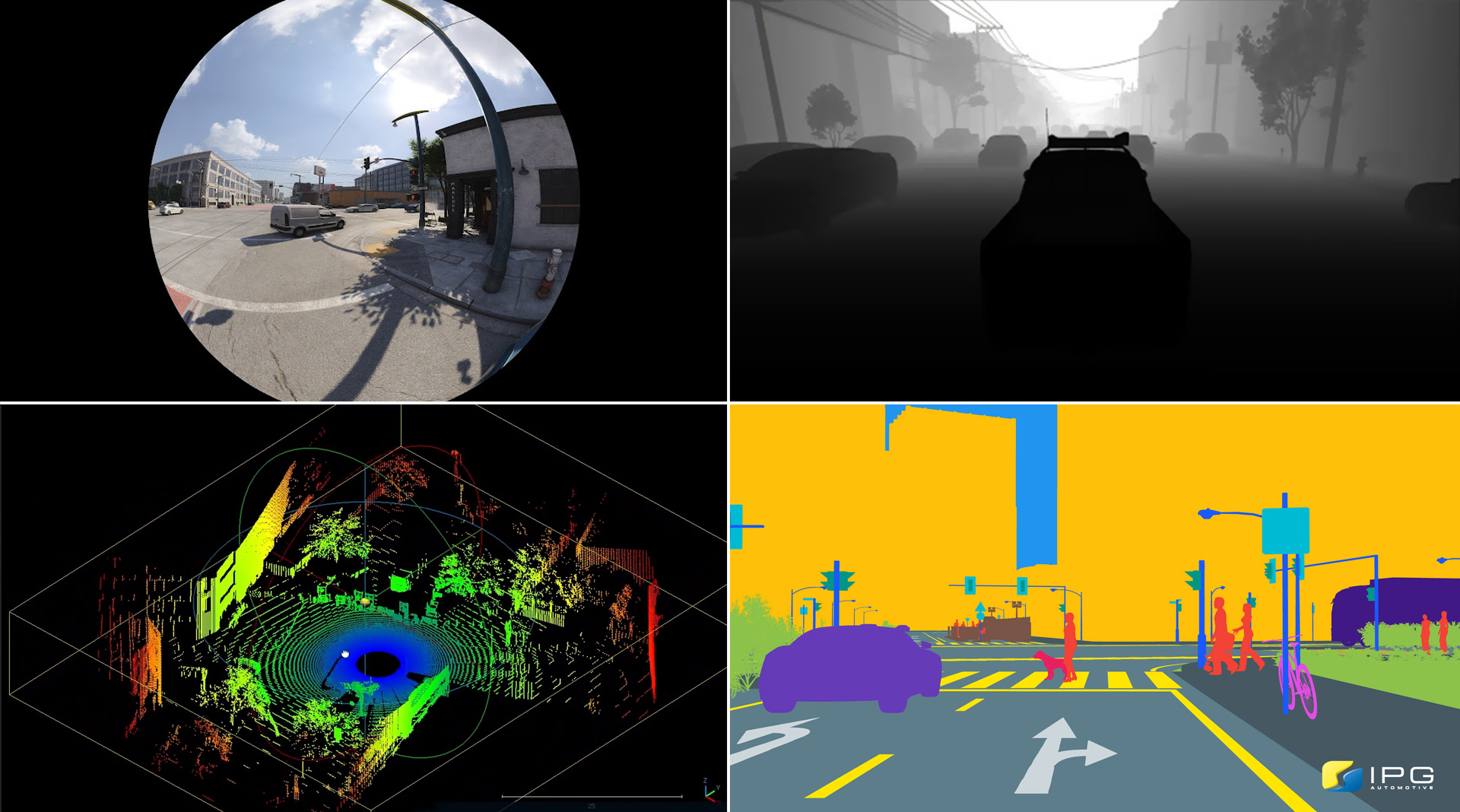
- synthetic environments for AI training;
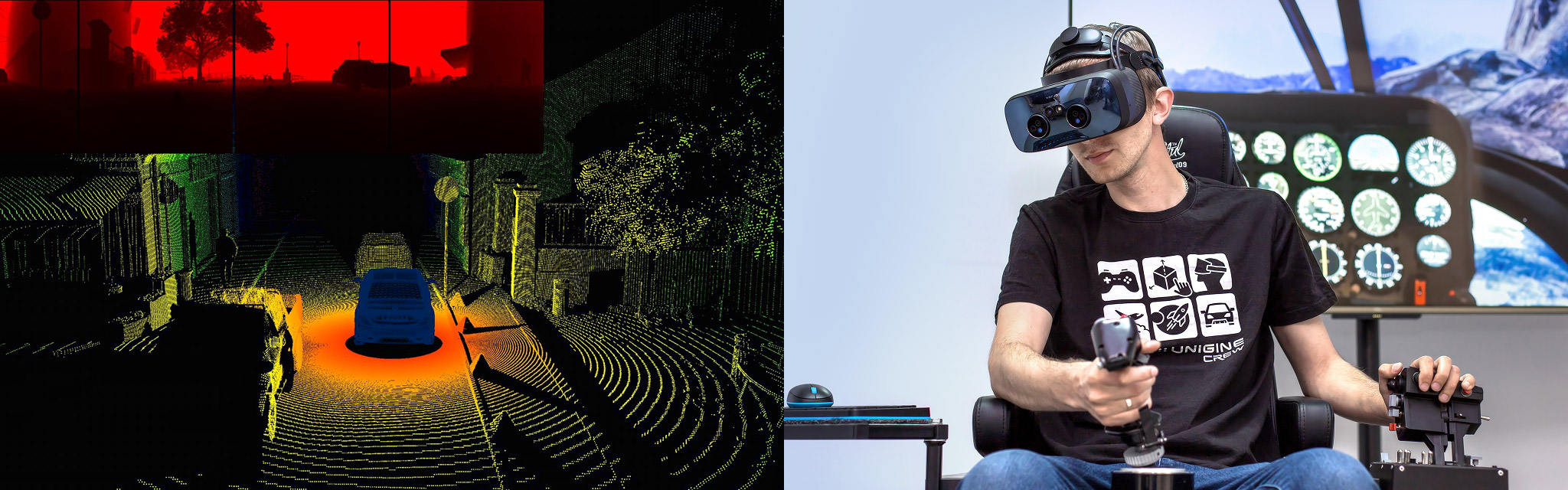
- trainers and VR simulators;
- digital twins;
- geospatial 3D systems.
In terms of game development, our engine can also be used, but that is not a revenue-generating direction for us. Meanwhile, we are developing a major game on UNIGINE for PC, PlayStation 5, and Xbox Series X/S (currently in the post-production stage) and successfully prototyping new game projects on our engine.
What new important features were added to the engine in 2025?
Denis: Numerous optimizations across the board: CPU and GPU performance, RAM and VRAM usage, loading times. Our current AA game is in the final stages of optimization and polish. Such a large project serves as an excellent test for the engine, allowing us to fine-tune all aspects of the technology.
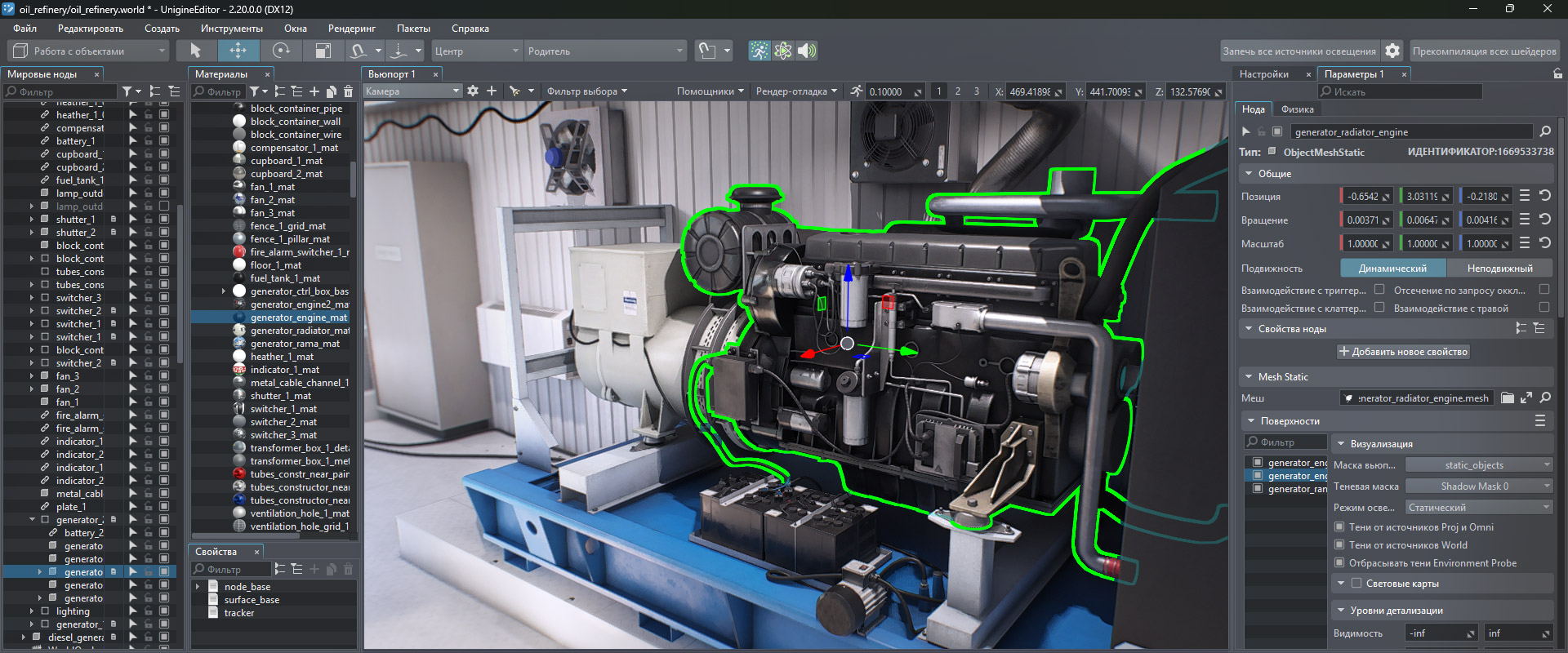
Significant features to note include: improvements in VR/XR, support for Gaussian Splatting, enhanced clouds, a visual UI editor, and numerous QoL improvements in the scene editor.
Have the requirements or expectations for tools from developers changed, or have the developers themselves changed in 2025?
Denis: We see more teams using code generation through AI agents (at least at the prototyping stage). Therefore, we are making more indexable materials available for AI model training: we've released all the example source codes for API usage on GitHub and are expanding public documentation. Overall, we're working to make the engine even more AI-friendly.
How has the game engine market changed over the year?
Denis: In Russia in 2025, it's worth noting the liquidation of the legal entity of the Russian game engine Nau Engine, in which VK planned to invest 1 billion rubles at its launch in 2023.
I can comment on this: we have a cohesive team of 100+ highly skilled specialists, and we've been developing our SDK since 2004 — for almost 21 years. We maintain a clear focus and don't try to be an engine "for everything and immediately" or for any platform. Hoping that a team assembled from scratch could create a suitable modern 3D engine in a couple of years is a utopia.
A versatile real-time 3D engine is a highly complex software product that only a few companies worldwide can handle. It's often not just about the budget but the accumulated experience of the team and the time spent polishing the technology in close connection with users. The typical metric for complex software applies here: a mature solution (especially a platform one) usually requires at least 10 years.
As a result, UNIGINE remains the only 3D engine in the local software registry. By the way, we write more about this on a separate landing page at unigine.ru
Globally, a drama around Unity is unfolding again — let's see where it leads.
As for Unreal Engine, Epic Games’ collaboration with the developers of "The Witcher 4" yields impressive results in characters and vegetation. We have room to grow here, as well — we are actively working in this direction.
What trends in engines do you expect to strengthen or emerge in 2026?
Denis: Integration of AI tools is undoubtedly a hot topic. However, in practice, this does not always have a positive effect everywhere.
What should we expect from the engine in terms of functionality in 2026?
Denis: We have already made significant advances in animation and characters in general — we are currently rolling out these improvements in our own game to include them in the main engine branch in 2026.
In addition, we are preparing extended project templates to cover typical client tasks (primarily in the field of professional simulators).
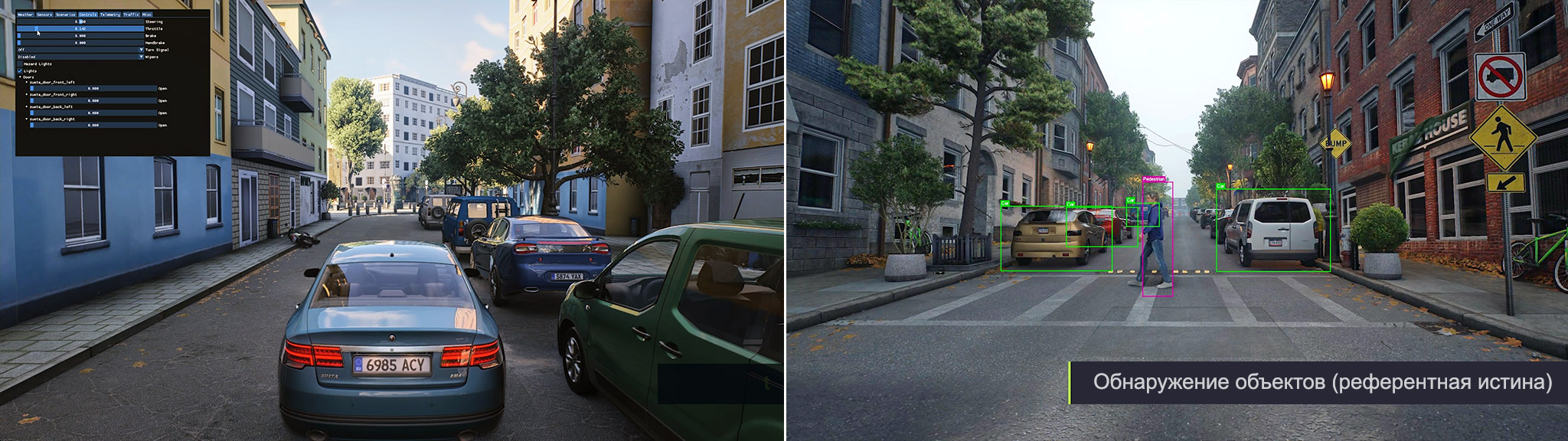
We are also actively developing a feature set that allows creating virtual polygons on UNIGINE for AI training and testing — even more useful functionality of this kind will appear in 2026.