"We see a real potential in the niche of conditional AA projects," Gleb Kadomtsev from Game Art Pioneers on the results of 2025
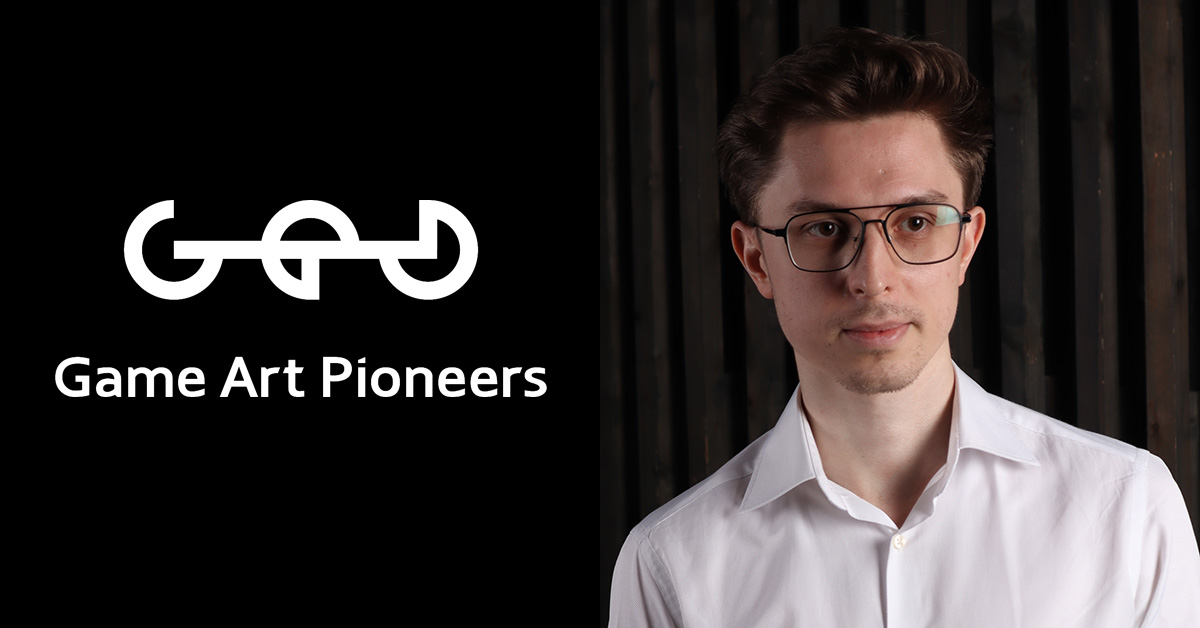
We continue to summarize the results of 2025 with game (or game industry-related) teams. Up next is an interview with Gleb Kadomtsev, Director of Development at Game Art Pioneers.
How was 2025 for your business? What achievements stand out? What lessons have you learned?
2025 was a year of deep transformation for our company. We evolved from a team of enthusiasts into a fully operational business, while retaining all the energy, motivation, and ideas that formed the core of the Game Art Pioneers team.
Looking back, I am genuinely amazed by all that we've achieved both externally and internally.
Together with AKI, we participated in several major international exhibitions from China Joy and Tokyo Game Show to G-Star and Insomnia Egypt, establishing some genuinely important contacts for our future project publishing endeavors.
Events in Russia were equally significant. We participated in several sessions at SPIEF 2025 and a number of gaming events and conferences, with a booth for "Zaychik" and numerous speakers from our team at the "Moscow International Video Game Week" sessions, and of course, presented a demo of "Cyberslav: Eclipse" at "IgroMir," receiving a flood of positive feedback from attendees who called it the main event of "IgroMir." This was the ultimate proof that our production has become a well-oiled mechanism capable of handling challenges, as the demo version was assembled in just a few months.
After SPIEF 2025, we were able to launch our educational initiative in collaboration with the Russian Ministry of Science and Higher Education, which resulted in the impromptu August gaming festival "REACTOR" at the Museum of Atom at VDNH. Within just three weeks, we organized an event attended by over 20,000 people, featuring representatives from "Lesta Games," Astrum Entertainment, winners of IRF contests, several indie developers, and representatives from government agencies and universities. By the way, in 2026, we intend to scale it up and focus even more on education in game development.
One of the most notable events was our collaboration with the developers of "Zaychik." We launched a series of collaborations, including unexpected ones, related to the game with the perfume brand biblioteka aromatov and the handcrafted skincare brand OOMPH. Many more collaborations await the game's audience in 2026, as now it's not just a visual novel but a full-fledged franchise, with an anime series based on "Zaychik" announced at "IgroMir," which will be produced by the online cinema "IVI."
Finally, we are currently in the process of the long-awaited move to the Moscow Gaming Cluster. Thanks to the collaboration with AKI, we have received access to technology and equipment essential for creating large-scale projects in Russia. We have become operators of the photogrammetry zone next to the motion capture studio.
And this isn't even the whole list.
How has the situation in the gaming market for publishing changed from your perspective?
I don’t think I can give an extensive answer from the perspective of traditional publishing since our approach is somewhat different. Our key activity remains game development. In terms of publishing, we contribute more through connections, establishing specific marketing activations, collaborations, and generally doing much that is not typical for other publishers. We don’t compete with other publishers. Instead, we are ready to work together and complement strong market players with our expertise.
Has the practice of working with developers changed? Has it become easier or harder to work with them? Have they changed as a group overall?
The main challenge has been and remains the developers' lack of understanding of the market they operate in. Unfortunately, most developers are still creating dream games and do not want, or more importantly—do not know how to calculate the real capacity of the niche they are entering. This is usually left to the publisher, who then takes an even larger share. The key problem here is that people are not ready to adapt and change their product to improve its chances of success. We went through this ourselves, but the need to attract serious investments forced us to not only reconsider our business model but also to create a market analysis tool that allows us to identify promising gaming niches and provide evidence for why our game should be precisely the way it is and cost as much as it does. We hope that in the future this tool will significantly improve the quality of Russian gaming projects even at the concept level.
What was this year like for the niche within which you usually release games?
It depends on which niche we're talking about. We see a real prospect in the niche of so-called AA projects. These games often have a much higher return on investment than AAA games. Moreover, their business model is much more justifiable than AAA. Currently, the vast majority of investors in Russia are non-specialized, to whom games as a business are particularly perplexing. AAA games are not always clear even to specialized players, especially when talking about Russia with all its constraints.
We see that, despite the challenges, AA-level games:
- are feasible—we can ensure the production with people and technologies;
- are justifiable— we can calculate the costs of game development and justify these expenses.
What conclusions and lessons from 2025 would you highlight for developers preparing for release?
Analyze. Try to critically look at your project and base your analysis not on the most successful but on the most failed projects in the niche. But do not be afraid to create large projects. If you clearly understand your capabilities and, more importantly—your limitations, you'll understand how to work with it. Then, the implementation will remain a matter of time and expertise of your team, which can be changed and expanded.
What strengthening or emergence of trends in your niche do you expect in 2026?
I expect the strengthening of the trend toward Slavic themes in games and, more importantly, the transformation of this trend. "Slavicness" in its pure form, as our research has shown, interests no one. It’s a different story when "Slavicness" is part of something more complex and used in unusual combinations. In this regard, I am very interested to follow Chains of Lukomorye, where folklore combines with the aesthetics of World War I. And, of course, I hope "Cyberslav: Eclipse" will be one of the pioneers in this area.
What are the company’s plans for 2026?
2026 will be the year of production flourishing for us. We are currently completing our move and setting up new equipment, after which we will begin actively increasing the pace and team size.
We continue to work on DISTORTION and increase the pace of developing "Cyberslav." In addition, we have several internal infrastructural products and initiatives that we plan to bring to the market during 2026.
We are very pleased with the results we have achieved by working closely with other partners. I believe that consolidation of forces is one of the key trends in the industry right now. Only by uniting the industry in the country, can we create products that will gain global popularity.