Analyst suggests that significant reductions in hardware prices are unlikely before 2028

According to recent research from S&P Global Market Intelligence Kagan, a reduction in gaming console prices is unlikely before 2028. This projection is based on the planned increases in production capacity for DRAM, an essential component for gaming devices whose prices have surged due to high demand from the AI sector.
The report anticipates DRAM capacity to expand to 184,000 300mm-equivalent wafers by the year's end and 434,000 by 2027, with a substantial increase to 819,000 projected for 2028. This growth may align supply with demand, potentially causing prices to stabilize. However, whether this will lead to any price reductions is uncertain. Analyst Neil Barbour suggests 2028 could be the earliest feasible time to introduce new, cost-effective consoles, contingent upon steady demand and timely execution of new manufacturing projects.
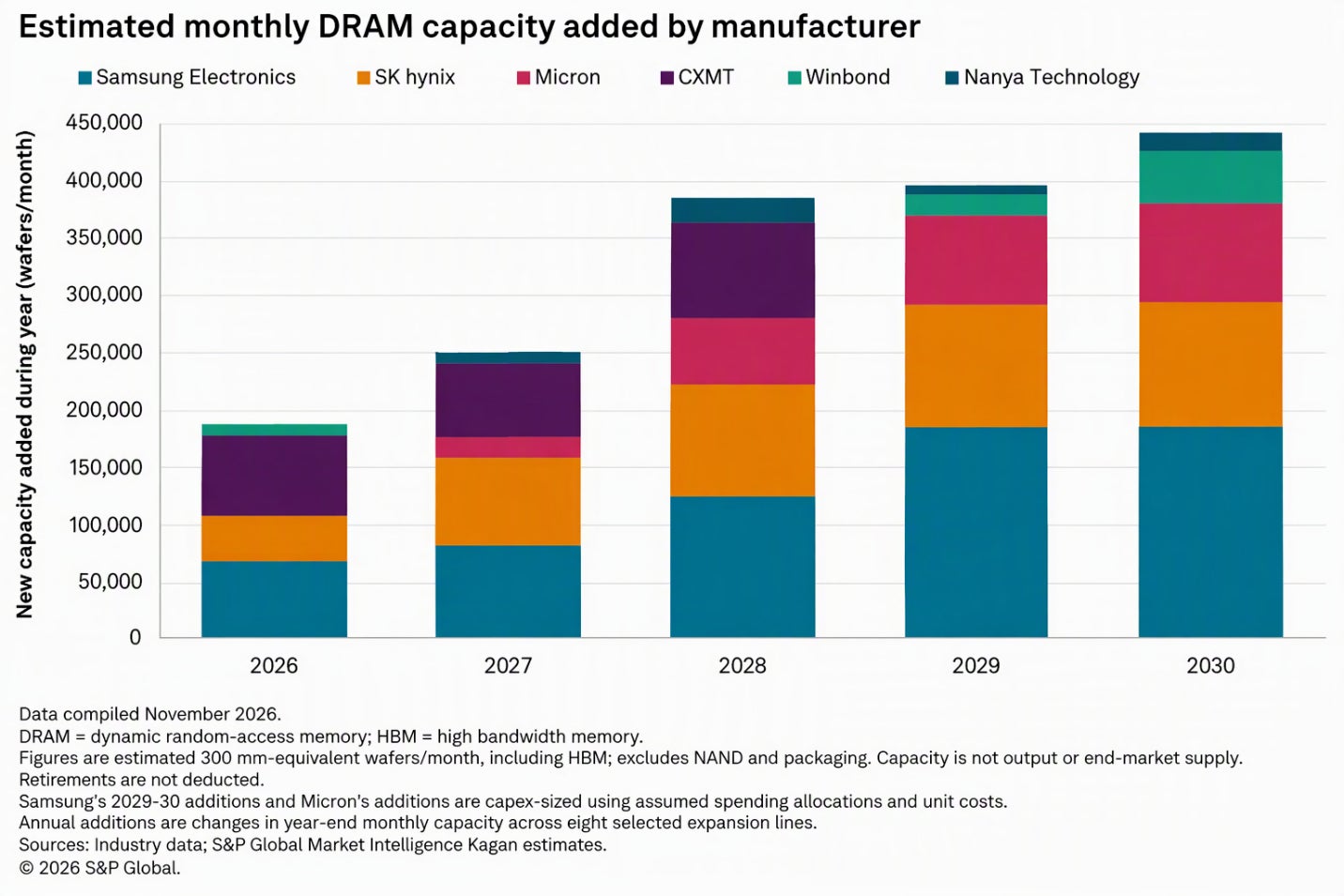
"Should demand from data centers increase, it could quickly absorb the additional supply," Barbour mentioned to GamesIndustry.biz. He noted that these manufacturing developments are geared more towards meeting data center demands, rather than the consumer market, driving record revenue and profits. If the expansion slows, either due to regulations or lower-than-expected demand, traditional DRAM could see increased availability. The report suggests serious discussions around this issue won't begin until 2028.
During this period, price stability is anticipated, with no immediate reductions projected. Barbour noted, "While additional price hikes are not guaranteed, expecting any significant price drops soon would be unrealistic."
S&P Global forecasts an 82% rise in global DRAM capacity, reaching 3.64 million wafers monthly by the end of 2030, with Samsung, SK hynix, and Micron contributing to the majority of the growth.
The speculated release of the next Xbox console, Project Helix, in 2028 is tied to DRAM capacity expansion, potentially impacting its cost, expected to be between $1,200 and $1,800. Barbour emphasized the necessity of increased DRAM supply for new console launches, referencing current supply shortages reported by Microsoft.
Xbox's CEO, Asha Sharma, emphasized the focus on "efficiency and affordability alongside performance" due to rising hardware costs and AI advancements, stating that the current components crisis necessitates innovation and offers consumers more flexibility in console purchasing.
Experts noted earlier this year that increasing AI demands are pressuring chip producers, leading to higher prices for consumer-grade hardware. Moreover, in June, SK Hynix, Samsung, and Micron faced legal challenges over alleged anti-competitive conduct in the DRAM sector, accused of reducing consumer DRAM supply against economic logic.